
Pick the channel that can carry this buyer's proof, then keep the other channel for the load the first one cannot hold.

The short answer, with its condition
The email camp will tell you the case is already closed. Cold email vs cold call is a rate contest, they say, and the written channel wins because you can reach more people before lunch. Look at last month's reply column. If email replied more often, why are you still arguing? Call-first teams answer with a different trophy. Connect rate, they say, is the only honest metric, because a live voice can test interest before a stranger deletes you. Both sides are measuring output after the fact. Neither one asked what the buyer had to decide, or what proof that decision required. If you start from the scoreboard, you'll pick a channel that looked busy and still failed the next action.
The governing condition is simpler than a playbook of strategies. Ask what the next decision needs to travel through the channel. If the buyer must review a note they can forward, email can carry that burden. If the next move is an objection you can't script, a call can carry it. Metrics still matter, but they're late reports of that fit. Google's email sender guidelines require senders to meet authentication and other delivery requirements, with extra requirements for bulk senders. That isn't a growth tip. It's a reminder that email only works as a strategy when the message can arrive and still be refused. A higher reply rate doesn't rescue an offer that needed a live follow-up. A higher connect rate doesn't rescue an offer that needed time and a document. Name the primary channel for the decision load, then use the other channel only when it adds context the first one cannot hold.
Why a better rate still fails the next decision
Drop reply rate as the deciding test the moment the offer's proof no longer fits a short spoken exchange. Drop connect rate the moment a written message cannot answer the live question you expect. You're then scoring leftover activity. The useful metric is whether the channel carried the proof and still left a clean no. If email arrived and the buyer could refuse, you learned something about fit. If a call connected and the person could end it, you learned something else. Counting replies while the packet never landed, or counting dials while the person already objected, isn't a channel comparison. It's a report on a duty you already failed. Which number are you still defending after that duty broke?
What actually differs
What actually differs isn't charm. It's the load each channel can carry, and the tools that pretend to erase that load. The email side points at sequencers, inboxes, and draft helpers and says you can industrialize the first touch. Call-first teams point at dialers, local presence, and talk tracks and say you can force a live test. Both tool stacks are real. Neither one changes the dimension that decides the contest. Email can hold a packet: a subject, a body, an attachment, a record the buyer can forward. A call can hold a hearing: timing, tone, an interruption, a spoken yes or no. If your tool can't carry that packet or that hearing, it isn't helping you choose. It's helping you send more of the wrong burden.
The email side will answer that written outreach is safer because it leaves a trail. Call-first teams will answer that a trail is useless if nobody picks up the real objection. The U.S. FTC's CAN-SPAM compliance guide requires accurate header information, nondeceptive subject lines, a valid postal address, and a clear way to opt out of commercial email. That's the email channel's response burden in legal form. You have to say who you are, say what the message is, and leave a working no. A cold call has its own local rules, which you should verify for your unit. The deciding rule isn't which tool feels more personal. It's which channel can carry the proof and still honor a refusal. If you can't keep that duty, the tool didn't make you faster. It made the failure louder. So which duty are you actually asking the channel to carry?
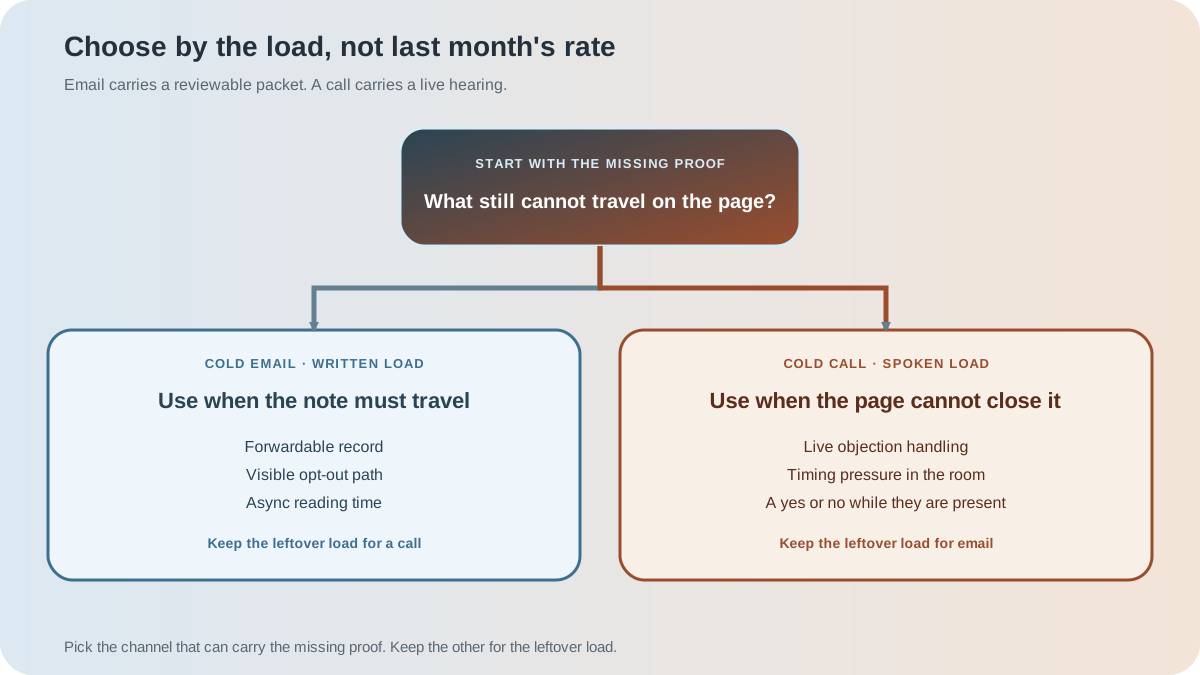
The proof a channel must carry before you send
The FAQ that keeps circulating is which channel is better. That question is a trophy hunt. Better for what decision? Better for which proof? A drafting workspace can prepare a written first touch. OKKI Go can do that from company context you already supplied, while a person still confirms recipient, subject, and body. That is not a verdict for email. The same team can still need a live hearing if the missing proof is an objection no page can close. Ask the FAQ the other way. What must this channel prove before you're allowed to use it? If email can't identify you or leave an opt-out, you don't have email. If a call can't be refused, you don't have a conversation. You have pressure.
Trade-offs side by side
Put the two channels side by side and the usual columns are speed, cost, and personalization. Those columns hide the trade-off that actually breaks a sequence. The email side says data and deliverability are the whole game: if the message never arrives, your process never started. Call-first teams say reachability is the whole game: if the number is wrong, or the person already said no, the process is already over. Both are right about their own failure mode. Both are wrong if they treat the other channel as a spare wrapper for the same ask. Process and workflow only exist when the second touch carries something the first channel could not hold. Repeating the same ask on a new channel isn't a workflow. It's a retry. Can that second touch add proof the first one couldn't carry?
The UK ICO explains that direct marketing rules depend on the recipient and the channel, and that organizations must also consider data protection duties and objections to marketing. You don't get a free second channel because the first one failed. If someone objected to email, a later call isn't persistence. If someone asked you not to call, a later email still has to meet that channel's rules. HubSpot documents Breeze meeting prep using CRM context and, after a conversation, generation of notes, action items, follow-up drafts, and recommended CRM updates, with the rep reviewing follow-ups and approving property updates. That's a workflow only if a person still reviews the next artifact. The deciding rule is the same one the ICO is pointing at: pick the channel whose duty you can keep, then sequence only when the second touch changes the evidence or the question.
Pick by your situation
Take a situation you can run without inventing a client. A two-person outbound desk is selling a mid-market workflow change. The next buyer decision is whether the change fits an existing stack. The operating constraint is mixed time zones, one shared inbox, and a two-hour window when anyone answers a phone. What you have in hand is company context, a short product note, a work email that has not bounced, and a direct number that may go to voicemail. Scenario_assumption: the recipient has not objected to email, and a live conversation is possible during their business hours if you get through. The email side will tell you to send first because last month's reply rate looked healthier. Call-first teams will tell you to dial first because the fit question is technical. Both are guessing from a leftover metric.
Change the test. Ask which channel can carry the missing proof. If the buyer needs to read the note and forward it, email can sit with that packet. If the missing proof is a live constraint you can't put on a page, the spoken channel has to carry the hearing. Under that scenario_assumption, the written channel can deliver the note and leave a clean no, while the spoken channel can't leave the note behind unless you follow with a message anyway. So you make email primary, and you keep the live conversation for the question the note can't close. If you need a written packet first, keep the spoken channel for the question the packet cannot close. OKKI Go can dress a written note. It cannot decide that the missing proof is live. The limitation is the usual one. If you never confirmed the recipient, or the buyer already objected, the draft didn't choose the channel. It only dressed the wrong one.
When the choice flips
Hold the email-first recommendation when the buyer needs time and a reviewable artifact, and you can identify yourself honestly on that channel. By definition, cold email is a written commercial approach sent to a person who did not ask for that message. A cold call is the live counterpart: you interrupt someone who did not ask for the conversation. The cold part is the missing relationship, not the medium. The email side will say that definition already picks a winner: writing scales. Call-first teams will say the definition already picks the other winner: only a voice can test a stranger. Neither definition awards a trophy. Each one names a carrier. Keep email primary while the missing proof still fits a written record. When does that stop being true?
The recommendation breaks when the artifact is no longer the bottleneck. If the buyer already saw the note and the next uncertainty is live qualification, email is now slower. If the number is unreachable, or the person asked you not to call, you no longer have that channel. The threshold is the next unanswered question. Document still missing, keep email. Live yes or calendar, switch. HubSpot's documented post-call path, notes, action items, follow-up drafts, and recommended CRM updates that a rep still reviews, is the flip in operational form. The live exchange is useful when it produces a record a person still checks. The follow-up email is useful when it carries what the conversation just made specific. Until that happens, adding a spoken touch to every email ignores the decision context.
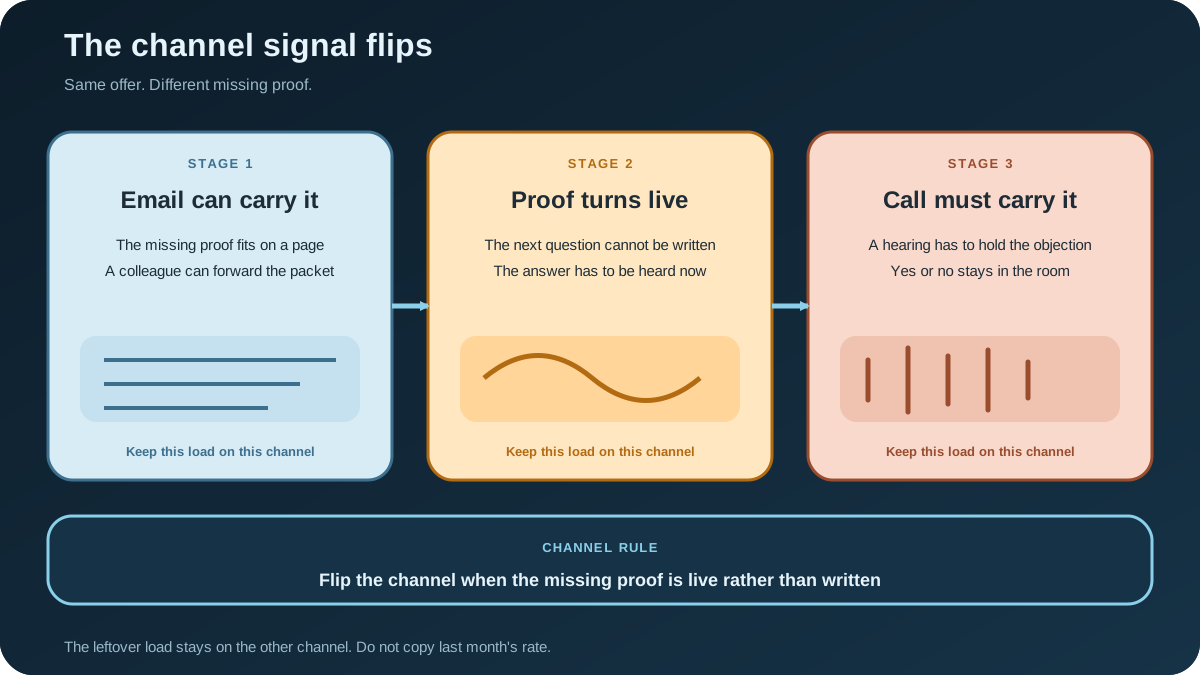
Pick the primary channel by the proof you still don't have. Keep the second channel for the load the first one cannot carry. If you can't name that missing proof, you aren't comparing cold email vs cold call. You're replaying last month's rates.
Frequently asked questions
Which is better for outreach, cold email or a cold call?
Neither channel is universally better. Choose the one that can carry this buyer's proof and still leave a clean way to refuse.
When should a team use cold email instead of a cold call?
Lead with email when the next decision needs a reviewable artifact the buyer can forward, and when you can identify yourself, use an honest subject, and leave a working opt-out.
When does a cold call beat cold email?
Lead with a call when the next unanswered question is a live objection, a tone check, or a calendar commitment that a written thread cannot test. Verify calling rules for your unit.
Can cold email and cold calling work in the same sequence?
Yes, when the second touch carries new proof or a new question the first channel could not hold. Repeating the same ask after a silence or an objection is not a sequence.