
Hire a specialist for a named evidence gap with a handoff artifact, or keep the work inside so sales can still learn.

When does a lead generation specialist actually earn the hire?
Picture the week after you hire lead generation specialists. Your calendar is full. Every slot has a name and a time. Then you ask what your team learned about who can buy, who is willing to buy, and how those people discover you. The room goes quiet. That is a full calendar with empty learning. The default pitch says specialists are valuable because they produce more leads, appointments, or outreach than an in-house team. If you buy that story, you will hire for volume and you will measure volume. The strategies that look impressive on a weekly report keep activity moving. They are not automatically the strategies that transfer evidence. Your sellers still have to qualify and still have to decide whether a name belongs in the pipeline. A packed calendar without that transfer proves only that someone was busy on your behalf. So what actually decides the hire? Not how many names they can add. Whether they own a bounded evidence problem you cannot staff, and whether they hand the evidence back.
The governing condition is a named gap, not a feeling that you need more people. Australian government guidance on identifying a target market asks you to research needs, ability and willingness to buy, segments, buying habits, and discovery channels. That research is the first evidence problem. If your team cannot staff it, a specialist can own that slice. If your team already knows those answers and you still hire for more activity, you are buying motion. Strategies then drift toward volume plays: more lists, more sequences, more booked slots. Those tactics become the wrong hire when they replace the research you still needed. Keep the specialist on a bounded problem, such as a channel you cannot cover, and require a handoff artifact. Otherwise keep the work inside, even if the calendar looks thinner. A thinner week that teaches you who can buy is more useful than a full one that leaves qualification guesses with the vendor. Would you rather defend a busy week, or a market you can actually describe?
When does the scope keep the notes on their side?
The verdict flips when the specialist's scope of work keeps knowledge on their side of the wall. Ask what they will transfer: the notes that explain why a contact was qualified, the segment definitions, the discovery-channel findings, and the review cadence. Write those into a knowledge-transfer clause before anyone signs. Salesforce Pipeline Inspection treats Push Count, Days in Stage, Recent Activity, and Contacts as separate fields. This article does not mash those fields into one health score. It treats a review-snapshot slippage rate as movement in locked close-date fields, which is a different question from whether the week looked busy. If a specialist can push dates and log activity without transferring why the date moved, your CRM looks alive while your learning loop is cut. If they will not name the evidence they will return, you do not have a specialist hire. You have rented activity. Can you point to the clause that brings the notes home?
What actually differs when you compare qualification evidence?
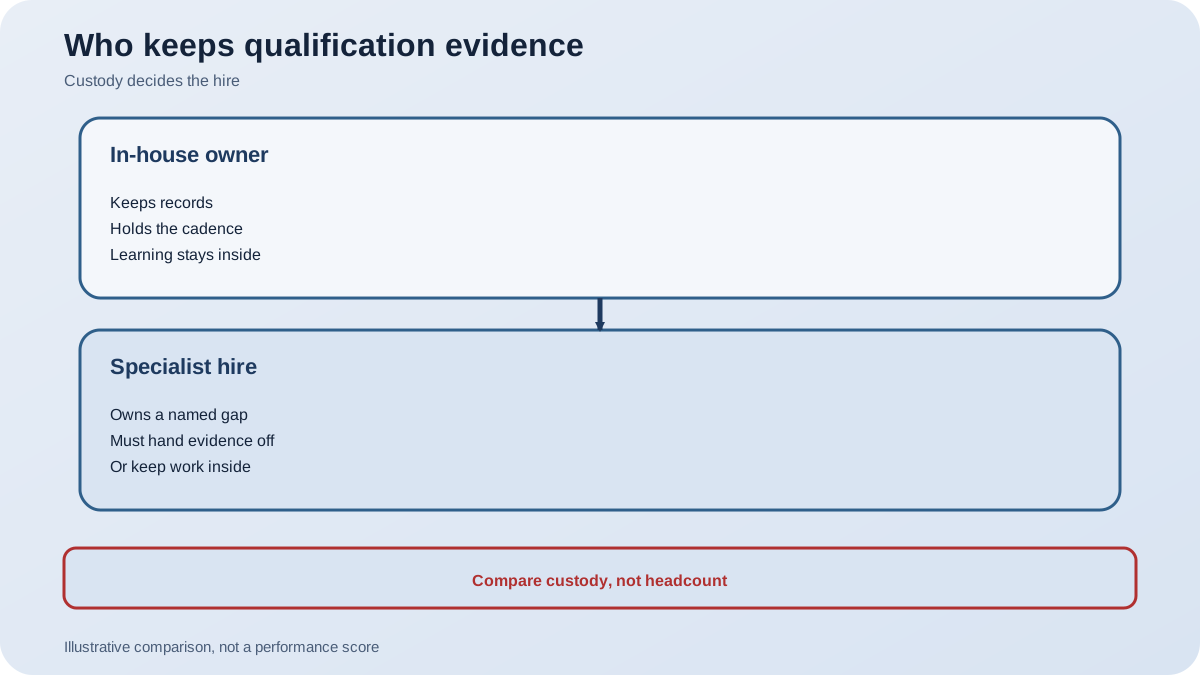
What actually differs is not charm or headcount. The dimensions are qualification custody, review ownership, and whether a marketing plan still connects the target market to actions you can inspect. U.S. Small Business Administration guidance describes a marketing plan as the thing that connects target market and advantage to actions, goals, budget, and review. That is the internal loop you are trying to protect. A specialist who owns outreach but not the review is working beside the plan, not inside it. Compare each dimension. Who writes the qualification rule? Who stores the record? Who reviews whether the action still matches the segment? If those answers stay with you, the specialist is a bounded contractor. If they stay with them, you bought a black box. Qualification is the record of why this person belongs, and who is allowed to reopen that record. Which of those records can you open on Friday without calling the vendor?
Now put the same dimensions against outsourced ownership of qualification records. When those records live on the specialist's side, your team can still receive names. You cannot reconstruct why those names survived. NIST's voluntary AI Risk Management Framework calls for documented roles, human oversight of automated work, monitoring, review, measurement, and continuing improvement. It is not a sales standard and it is not a certification. It still names the governance you lose when a vendor runs targeting or drafting without a role map you can audit. If an assistant proposes companies, someone inside still has to own the qualification decision. Internal ownership means your people can reopen the record. Outsourced ownership means you inherit a list. Hire the specialist where you cannot staff a named qualification gap, and only if the record comes home. Do you want a list, or a record you can still argue with?
Why is appointment count the wrong qualification test?
The evidence behind this qualification dimension is the plan-and-review pair, not the appointment count. If the marketing plan says you will review whether actions still match the target market, then qualification notes are part of that review. A specialist who will not return those notes is interrupting the plan even while hitting activity goals. Ask to see a sample handoff: segment, need, ability and willingness to buy as far as known, discovery channel, and the reason this contact is next. If they can only show a calendar, you already have the comparison. Volume is their dimension. Evidence custody is yours. Documented roles and a review cadence are how you keep custody when some of the work is outside. Without them, qualification becomes a rumor attached to a meeting. Can your next review meeting run on the artifact, or only on the booking count?
Which trade-offs stay invisible when you only count activity?
Side by side, the trade-off looks like capacity versus control. Keep the work inside and you keep the learning loop, along with the staffing problem. Hire lead generation specialists for unbounded outreach and you may fill the week, while you export the review. NIST's voluntary framework is useful here as a warning, not as a trophy. Documented roles, monitoring, review, measurement, and continuing improvement only work if someone inside still measures the work. Buyers often ask FAQ-style questions that hide this trade-off. Is a specialist cheaper than a hire? Will they book more meetings? How fast can they start? Those questions treat activity as the product. After a quarter, can your team explain the segment without calling the vendor? If the answer is no, you paid for motion and you still cannot teach the next seller. That is the column a retainer comparison will never show you. Which FAQ are you still using as a substitute for that test?
The FAQ most teams skip is the process question: what happens to a candidate after the first list appears? OKKI Go use cases describe a path from user context to candidate companies, then review and revision, selected unlocks, contacts, drafts, and confirmation before send. You can inspect that sequence at https://go.okki.ai/use-cases . It is a reviewed search, unlock, and contact-discovery workflow. It is not proof of intent and it does not promise meetings. Compare it with a specialist who unlocks and sends without your review. The hidden trade-off is speed without a checkpoint. A specialist can still own a bounded slice, such as a language or a channel you cannot cover, if every unlock and draft still passes your confirmation. If they skip that, you did not buy expertise. You bought unreviewed send volume. Ask the FAQ in that form before you compare retainers. What do you want them to own, the list or the checkpoint you can still refuse?
- Internal owner: you keep qualification records, the review cadence, and the learning loop, at the cost of staffing the gap yourself.
- Unbounded specialist: you may gain activity, while roles, monitoring, and improvement sit outside a review you can still run.
- Bounded specialist: they own a named research, data, channel, or qualification gap and return a handoff artifact your sales team can inspect.
- Reviewed workflow: context, candidates, revision, selected unlocks, contacts, drafts, and confirmation before send stay visible to you.
What does an activity comparison leave out?
An activity comparison can hide the missing artifact. Two vendors can look identical on meetings booked and still differ on whether your people can reopen a qualification record. Continuing improvement, in the NIST sense, is not a slogan on a slide. It is a review you can schedule with named roles. If the specialist will not sit in that review with the notes, the cheaper-looking retainer is the expensive one. FAQ pages that rank specialists by speed or volume train you to miss that. Use those questions as a prompt to ask for the artifact, not as the decision itself. You are allowed to keep the work inside when the vendor cannot show how improvement will be measured on your side. Would you still sign if the meeting count were stripped out of the proposal?
How should you pick by your situation and workflow?
Take a small B2B team that already runs a CRM. Sales still owns stages and close dates, which is the operating constraint you cannot outsource without losing the loop. The common approach says specialists are valuable because they produce more leads, appointments, or outreach than an in-house team. The fields you can actually inspect, if you use Salesforce Pipeline Inspection, are not one blended health number. The product separately defines Push Count, Days in Stage, Recent Activity, and Contacts. For this walkthrough, assume the specialist is measured on appointments while close dates may move without a written qualification note returning to sales (scenario_assumption). That assumption is labeled because it is not a measured client result. Activity fields can look busy while the reason a date slipped never enters your workflow. You will see a fuller calendar and a pipeline your managers cannot explain. You should not extend the specialist on volume. Name the evidence problem they will own, with a handoff in the weekly workflow, or bring prospecting back inside.
Map that situation onto the dimensions you already have. If the missing piece is research into a segment, the specialist owns research and returns the segment file. If it is a channel you cannot cover, they own that channel and return the discovery notes. If it is qualification labor you cannot staff, they return the record, not just the meeting. Your process should show where that artifact lands: a CRM note, a shared brief, a review meeting. You can keep discovery in a reviewed workflow on OKKI Go at https://go.okki.ai/ while a specialist owns only the named gap. That is a process choice, not a tools ranking. If your team can already staff the research, the data, the channel, or the qualification work, do not hire a specialist to duplicate it. Duplication looks like help. It cuts the loop you still need. Where does Friday's review look, at the calendar or at the file they returned?
Which artifact must your weekly workflow receive?
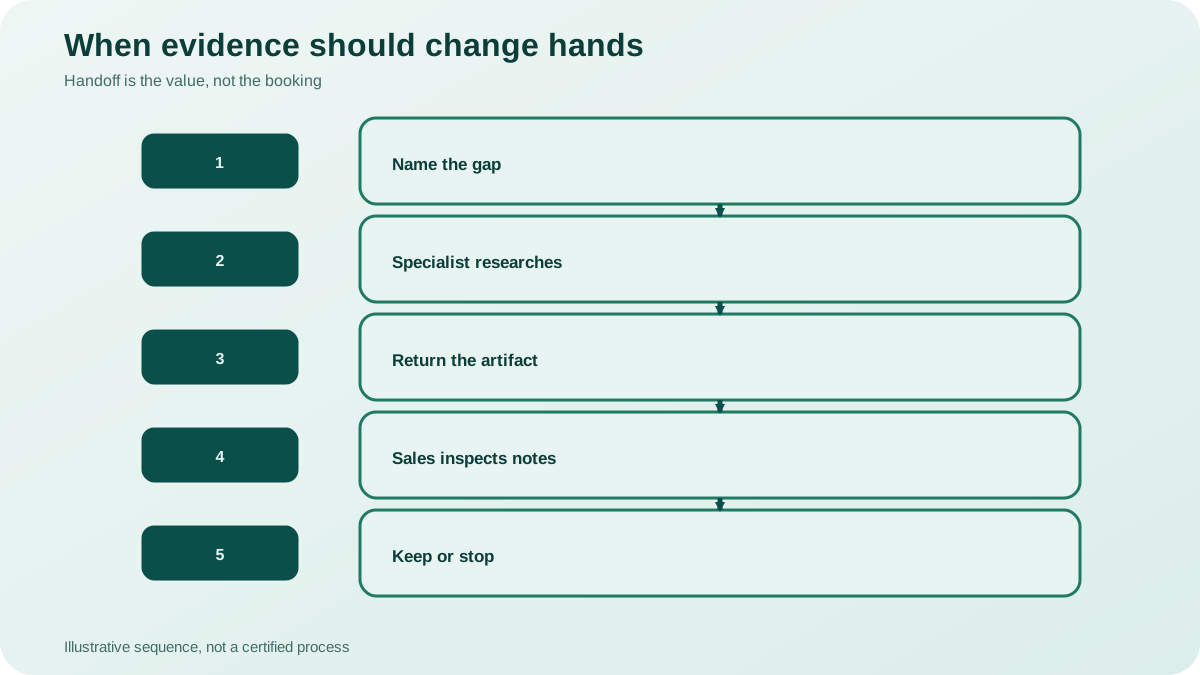
The situation-specific choice is the artifact, not the job title. A contractor, an agency, and an in-house specialist can all fail the same way if the weekly workflow never receives the qualification record. Write the step in language your team can run: research or outreach, then the artifact, then sales review, then keep, revise, or stop. If that step is missing, you are not picking by situation. You are hoping volume will teach you later. Push Count and Recent Activity can still move while Days in Stage tells a different story, so do not treat those fields as one score when you inspect the week. Your process has to read them apart. Can you name the file that should exist before the next close date is allowed to move?
When does the specialist recommendation actually flip?
The recommendation holds when you can name the evidence problem before anyone signs. It breaks when you hire to keep the calendar full and treat learning as a side effect. That is the common mistake. Limitations follow, and you should not talk past them. Candidates are not verified buying intent. Unlocks are not qualified opportunities. Drafts are not proof that a specialist understood your market. OKKI Go use cases make a reviewed sequence visible: context, candidates, review, unlocks, contacts, drafts, and confirmation before send. Use that as a checklist against a specialist's process, not as a performance claim. If their process has no review and no confirmation you control, the hire already failed the threshold. The threshold is a named gap plus a returned artifact you can audit. Below that, keep the work inside. Extra activity is not a small miss in that case. It is the thing that cuts the loop sales still needs. Are you hiring to learn, or hiring so you do not have to look?
When does it flip the other way? When your team cannot staff the research, the data work, the channel, or first-pass qualification, and a specialist will own that slice with a documented handoff. Then extra internal activity is the waste. You would be asking sellers to invent a target market after hours. Target-market research and a marketing plan that still connects advantage to actions, goals, budget, and review still belong to you as the buyer of the work. The specialist does not replace that ownership. They fill the gap you named. Sign only after that sentence is on paper: the evidence problem is X, the artifact is Y, the review owner is Z. If you cannot say those three things, you are not ready to hire lead generation specialists. You are ready to fill a calendar and call it a pipeline. Do not dress that up as a strategy. Name the gap, or keep the work.
What mistake reverses a hire that looked productive?
The recommendation flips the moment the artifact disappears. If the specialist will not return qualification records, stop. If they will return records you never review, stop. If search, unlock, and drafting run without a human confirmation step you control, stop. Those are limitations of buying execution capacity. They are not reasons to reject every specialist. They are reasons to reject unbounded activity. You can still hire for a bounded evidence problem. You cannot hire for a feeling that more names will teach you later. Confirmation before send is a useful picture of that limit, because it keeps a human in the loop without pretending candidates are already qualified. Name the evidence problem. Then sign, or do not. Which of those two sentences can you write today?
Before you sign, write the evidence problem in one sentence: the research, data, channel, or qualification gap your team cannot staff. Name the artifact that must come back, and name who reviews it. If you cannot write that sentence, keep the work inside. A full calendar is not a substitute for transferred evidence.
Frequently asked questions
What is the single most important factor in lead generation specialists?
Whether they own a bounded evidence problem you cannot staff, and whether they transfer qualification evidence back through an explicit handoff artifact. Volume of leads, appointments, or outreach does not decide the hire if sales still cannot learn.
What do most buyers get wrong about lead generation specialists?
Most buyers treat extra activity as the product. That can fill a calendar while cutting the learning loop. Qualification records, review ownership, and a knowledge-transfer clause are the comparison that activity reports hide.
How should you actually decide on lead generation specialists?
Name the research, data, channel, or qualification gap. Require a returned artifact your weekly workflow can inspect. Keep the work inside if your team can already staff that gap, or if the specialist will not hand the evidence back.
When does lead generation specialists matter most?
When your team cannot staff a named evidence problem and a specialist will own that slice with documented roles and review. They matter least when you only want a fuller calendar and you are willing to stop learning.