
A verified inquiry can still never pay. Treat badges as participation, then corroborate identity, demand, authority, and payment before you unlock terms.

The Inquiry That Never Pays
The inquiry arrived with a verified badge, a Gold-style counterpart tag, and a request that read like an order. You unlocked a price. Samples followed. Payment did not. The storefront still looks reliable. That is the symptom this page diagnoses.
How do you find reliable buyers on B2B marketplaces if the inbox already looks full? You stop treating participation as solvency. A badge proves the account joined and passed a platform check. It does not prove identity, demand, authority, or payment capacity.
Watch the same signs repeat. You can screenshot them. You do not need a gut feeling. If the chat cannot name a destination, a signer, or a payment path, you are still looking at participation.
- They ask for a full price list before naming a destination market.
- The volume in the chat is large, yet they cannot describe how the goods will land.
- The company name on a registry and the name in the message do not match.
- They press for samples or net terms on a first deal you cannot corroborate.
A usable strategy is staged corroboration, not a bigger pile of inquiries. You confirm who they are. You test whether demand exists where they say it exists. You confirm they can buy. You confirm they can pay. Then you unlock terms. Reverse that order and you donate files to anyone who can click Contact.
Official market-research guidance is blunt. You should assess product demand and destination conditions before you treat a market as entered. A marketplace chat is an introduction. It is not that assessment.
So the diagnostic question is simple. Did this inquiry survive identity, demand, authority, and payment checks off the platform, or did you only read a badge? If you cannot answer that in one sentence, you do not yet know how to find reliable buyers on B2B marketplaces for this contact.
Would you still quote if the badge vanished?
The decision detail is whether you would still share the same quotation if the badge disappeared. If the answer is no, you were buying confidence from the platform, not from the buyer.
Company identity belongs in that same check. Official export planning connects research, competitiveness, finance, digital trade, logistics, and execution. A chat that skips those links is a request for your file, not proof of a buyer.
Rule Out Cheap Noise First
Before you buy another inbox tool, rule out noise you can already see. Tools help only after you know which reading would change the unlock. Otherwise you add software to a badge habit.
What can you check cheaply, today, without a new subscription? Start with the export-plan stack that already exists in public guidance: research, competitiveness, finance, digital trade, logistics, and execution. If an inquiry cannot be placed on that stack, the tool problem is not missing features. The inquiry is incomplete.
- Registry or directory identity that matches the chat name and country.
- A destination you can research, not a vague 'worldwide buyer' line.
- A finance path you can name, even if you later refuse their requested terms.
- A logistics story that could actually move the goods they asked for.
Give yourself a five-minute test. Can you write one sentence for each of those four lines without inventing details? If you cannot, you do not yet have a buyer. You have a participant. The test is cheap because it uses tools you already have: a registry search, a destination note, a finance question, and a logistics question.
How should you read a pass? A pass is a named company plus a named destination plus a finance and logistics story that could be checked. A fail is a polished badge with none of those names. Inquiry count does not break the tie.
The implication is operational. Your first tool is a stop, not a scraper. You keep the marketplace for introductions. You keep research, finance, and logistics tools for corroboration. Mixing those jobs is how false-reliable inquiries get quoted.
Outreach tools are not payment proof
If you also market or chase the contact off-platform, treat channel rules as a caution, not as a close. UK B2B marketing guidance depends on channel, recipient type, personal data, lawful processing, transparency, and objections. That is UK guidance, not worldwide legal advice. Still, the structure is useful: the channel you use does not prove they can pay.
So do not let an email sequence, a marketplace messenger, or a paid boost stand in for payment-term caution. You can be compliant and still unlock too soon. Screening and terms sit after identity and demand, not inside the send button.
False-Reliable Inquiries, Ranked
Once cheap noise is out, rank the remaining failure modes. You are not hunting a mysterious new marketplace. You are ranking why a contact looked reliable and then never paid.
The usual branches are few. Badge-only confidence. Demand that was never tested. Missing payment capacity. No authority to buy. Intermediaries who can chat but cannot transact. Treat those as ranked causes, not as personality flaws.
Probability, in practice, follows what you unlocked too early. If you sent a price file first, badge-only confidence is the lead suspect. If you sent samples to a destination you never researched, unverified demand is next. If terms moved before any finance story, payment capacity is the cause you should test before you blame 'lead quality.'
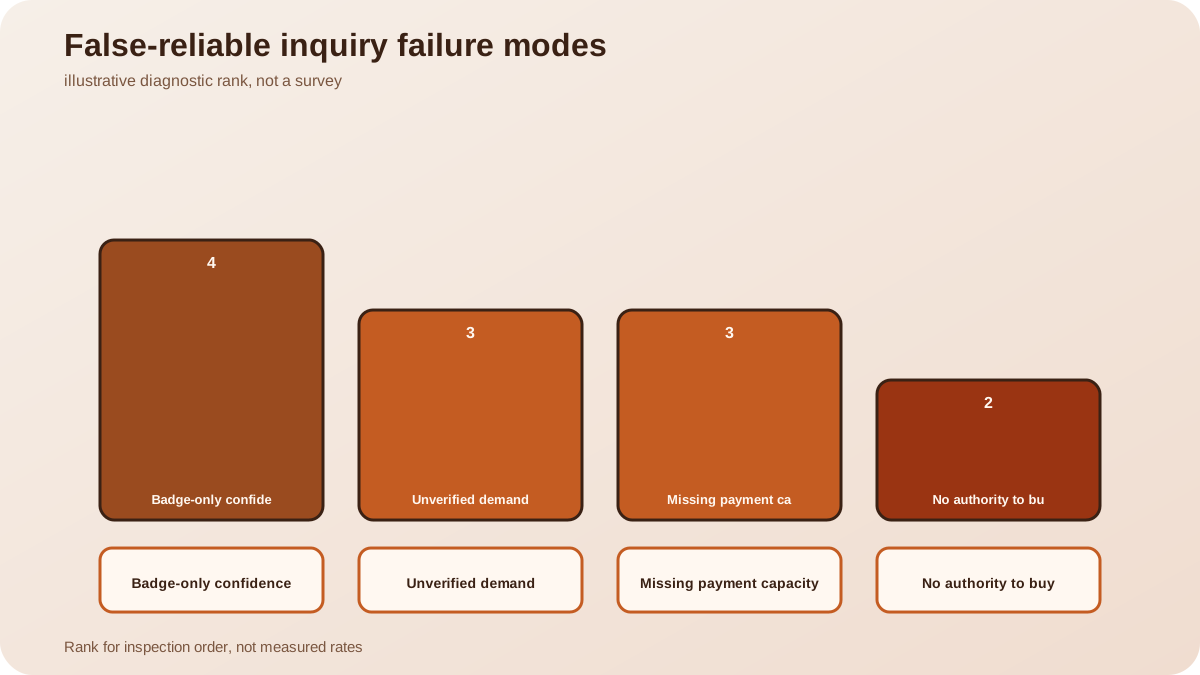
Exporters are told to test market demand, landed-cost competitiveness, and whether an export route is practical. That is the evidence you should map onto the ranked causes. An inquiry that cannot survive those tests is not a reliable buyer, however busy the storefront looks.
Rule the causes out in that order. Do not skip to a new platform while badge-only confidence is still your default. Do not buy more inquiry volume while demand is untested. After candidate review, selective unlock beats inbox-first contact. OKKI Go documents a review-before-send path at https://go.okki.ai/ ; use that kind of sequence as a stop, not as a faster spray.
Mistakes that look like diligence
The limitation is easy to miss because it feels like work. Filtering by Gold-style badges, sorting by inquiry count, and answering every verified chat are all labor. They still only prove participation. That is the core mistake.
Another limitation: country and partner due diligence, including background checks and applicable screening, sits outside the marketplace UI. If your process never leaves the chat, you have not done that work. You have only stayed logged in.
How Each Check Should Read
Verification is four readings, not one score. For each likely cause, write the check, the procedure, the expected reading, and what you will do if it fails. Keep those four questions nearby. They are the FAQ you should ask on every inquiry, not a footer afterthought.
- Identity: the legal name, country, and registry trail match the person who is chatting.
- Demand: the destination and product use can be researched, not only asserted.
- Authority: the contact can bind a purchase, or they name who can.
- Payment: a capacity story exists before you discuss net terms or sample risk.
Procedure is boring on purpose. You ask for the company name as registered. You look up destination conditions. You ask who signs. You refuse terms until a payment path is named. You do not need a new dashboard for that sequence.
Expected readings are names, not adjectives. 'Verified' is not a reading. A country, a product use, a signer, and a payment method are readings. If the chat only returns adjectives, interpret that as a fail and hold the file.
If you also send follow-up off the marketplace, keep the UK B2B structure in view: channel, recipient type, personal data, lawful processing, transparency, and the right to object. That guidance does not tell you they are a buyer. It tells you the send itself has rules. Do not confuse a lawful send with a corroborated payor.
Work a concrete scene. A factory receives a verified marketplace inquiry asking for a full quotation, free samples, and net terms on a first container. Introductions are cheap, while an unlocked price file and sample stock are not. What you can actually collect are identity, destination demand, signing authority, and payment capacity. You do not collect a badge rank as if it were cash.
Under a labeled scenario assumption, treat the Gold-style badge and high inquiry count as proof that this contact will pay. That assumption is the one to test. Hold the quotation, sample, and terms until the four readings exist off-platform. What you should see is a held file, not a faster reply. Badge-only confidence then gets logged as a diagnostic error. This scene applies when badge-only selection has not already predicted completed paid orders across your categories. If it has, extra corroboration adds little. If it has not, stop the line.
What a pass allows you to unlock
A pass is permission to unlock one layer, not all layers. Identity plus demand can justify a non-sensitive overview. Authority plus payment can justify terms. Mixing those permissions is how the never-pays inquiry got your file in the opening scene.
If you need a reminder question, use the ones at the end of this page. They are the same checks, restated so you can keep them next to the inbox. Ask them before you attach a file, not after the unpaid inquiry has already trained your team that badges equal buyers.
Correct the Unlock Order
The confirmed cause is early unlock. The marketplace did what marketplaces do: it introduced a participant. You treated that introduction as a buyer. Corrective action is a stop-the-line sequence before terms.
What does the corrected sequence look like in a tool you can inspect? OKKI Go documents natural-language company search, candidate review, route correction, contact discovery, draft preparation, user confirmation before sending, and visible send status. Read that as a review gate. You search. You review. You correct the route. You find a contact. You draft. You confirm. Then you send. You do not send because the marketplace badge lit up.
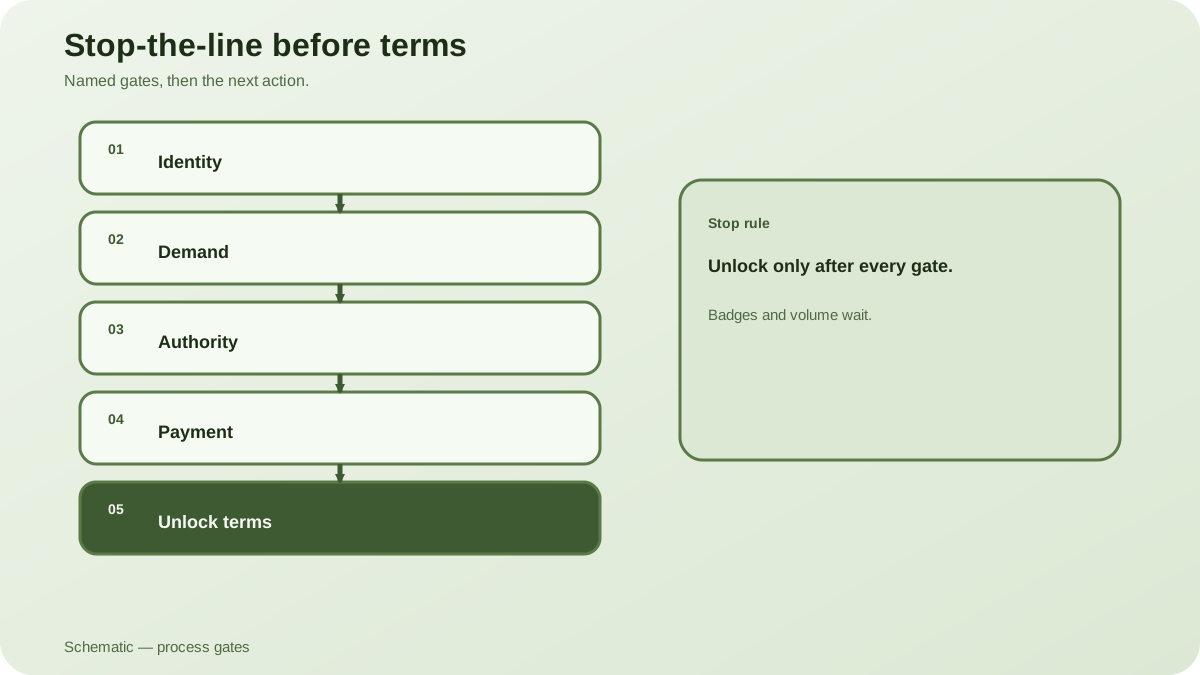
What you should see is slower first replies and fewer unlocked files. That is success if your problem was unpaid verified inquiries. Held quotations beat a busier messenger. If volume was never the failure, a faster inbox will not be the fix.
Walk the documented use cases at https://go.okki.ai/use-cases when you need the sequence in product language. Match it to your line: search and check before contact, confirmation before send. Do not import claims the pages do not make. They describe workflow, not a paid-order promise.
A stop-the-line gate does not replace country or partner due diligence, and it does not replace your counsel on terms. It only stops you from unlocking sensitive material while those checks are still empty.
One unlock, not a bundle
Corrective action is easiest when it is narrow. Stop one unlock. Hold the price list, or the sample, or the net-term offer, until identity, demand, and payment match. You do not need a new policy binder to do that on the next chat. You need a held file and a written reason for the hold.
When Checks Must Escalate
The inbox process breaks when the transaction leaves marketplace chat and becomes an export. Cross-border goods, requested net terms, a new destination, or a partner you cannot place on a registry are the usual break points. At those points, badge corroboration is not enough even if your four readings look tidy. You are no longer sorting introductions. You are deciding whether a party and a country can be checked.
The U.S. International Trade Administration recommends due diligence on countries and potential buyers or partners, including company background checks and applicable screening resources. That is U.S. export guidance. The right checks still depend on the transaction and the jurisdiction. Use it as an escalation threshold, not as a slogan.
When do you escalate? When you cannot complete a background check from public materials. When screening resources apply to the destination or the party. When payment terms would shift risk onto you before identity and demand are matched. When the contact wants you to skip the stop-the-line gate.
- Pause the unlock and name the country and the party you still cannot corroborate.
- Run the background and screening steps that apply to that pair.
- Keep the quotation, sample, and terms locked until those steps return a reading.
- If they refuse to be identified off-platform, treat that refusal as the result.
Due diligence guidance does not tell you which marketplace to join, and it does not certify a badge program. It tells you that countries and counterparties can require work the chat window will not do. Stay inside that claim.
Hold the file while screening runs
Escalation is still a stop, not a speech. While background checks or screening are open, you hold the same unlock you would hold for a missing identity reading. The buyer who will pay can usually wait for that hold. The inquiry that never pays often cannot.
On the next verified inquiry, stop one unlock. Hold the price, the sample, or the terms until identity, demand, and pay match. If they match, you have a buyer. If only the badge matches, you still have a participant.
Frequently asked questions
What is the single most important factor in how to find reliable buyers on b2b marketplaces?
Staged corroboration. Identity, demand, authority, and payment capacity have to match off-platform. Badges and inquiry volume only prove participation, so they cannot be the deciding factor.
What do most buyers get wrong about how to find reliable buyers on b2b marketplaces?
Most teams treat a shortage of leads as the failure. The usual failure is unlocking price, samples, or payment terms before transaction capability is corroborated. Badge-only confidence is a diagnostic error, not diligence.
How should you actually decide on how to find reliable buyers on b2b marketplaces?
Use a stop-the-line sequence. Search and review candidates, then unlock one sensitive layer only when identity, demand, and pay match. Keep marketplace chat as an introduction, not as solvency proof.
When does how to find reliable buyers on b2b marketplaces matter most?
It matters most when introductions are cheap and an unlocked file is expensive: first-container terms, samples, new destinations, or any deal that needs country and partner due diligence beyond a storefront badge.