Definitions describe scope. Bottlenecks decide where the next dollar should go.

The first budget goes to the missing condition
In a budget review, I write the strongest objection on the board first: demand generation creates the audience and lead generation converts that audience into names, so the former should come first. Does that sequence help when you're designing a new funnel from scratch? Yes. But it becomes unreliable when your question is narrower: where should the next marginal budget go in a pipeline that already exists? You can't answer that from a stage diagram until you've shown which condition is absent.
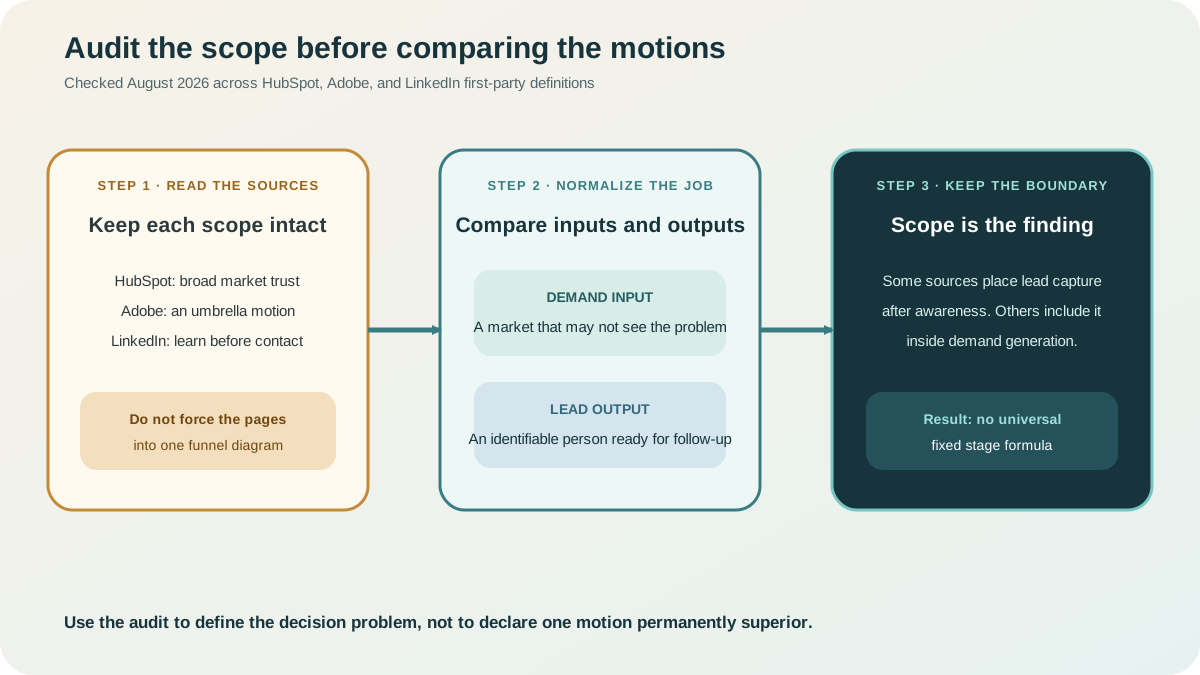
Now check the definitions with me. HubSpot's first-party definition, checked in August 2026, treats demand generation as the broader work of building awareness, interest, and trust, while lead generation captures contact information from people who express intent. Adobe's broader guide, checked the same month, goes further: demand generation is an umbrella that includes lead generation, demand capture, and pipeline acceleration, while lead generation concerns identifiable prospects. What do these definitions give you? Different operating inputs. You can begin demand generation before a person is identifiable; you need capturable interest before lead generation can act.
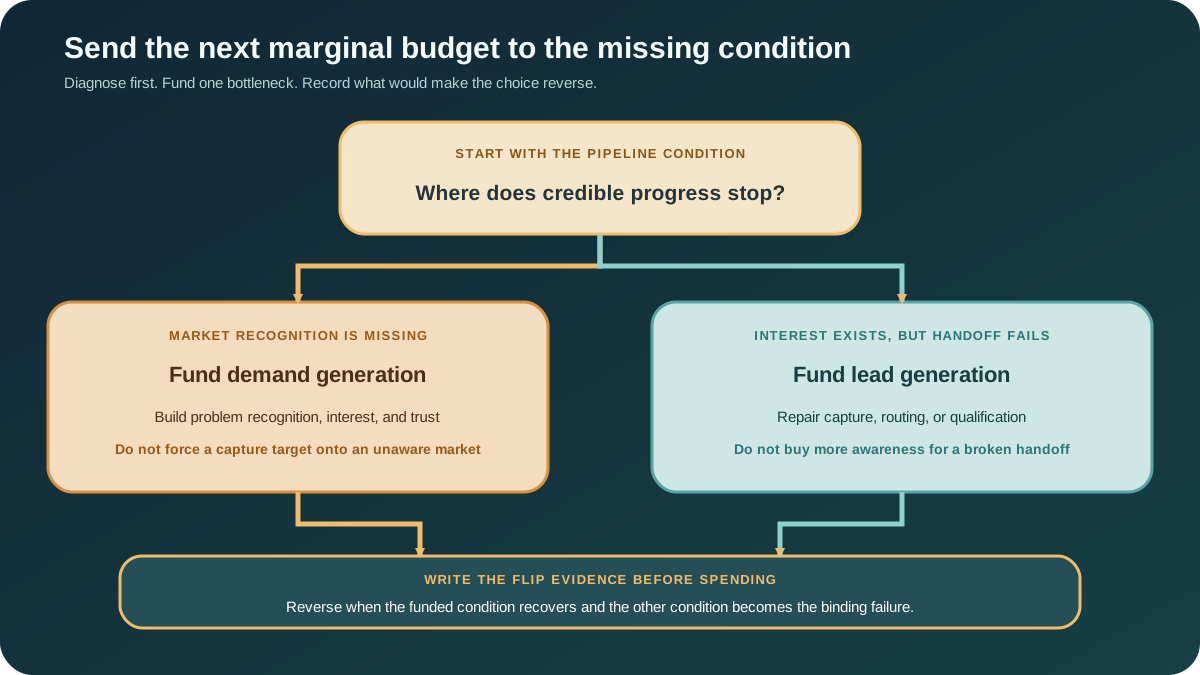
Here is the fork I'd put in front of your team. Do target accounts encounter the category but still fail to recognize the problem? Then forms, scoring rules, and qualification capacity are trying to harvest interest that isn't there; fund demand generation. Do relevant people already seek answers or identify themselves, only to disappear in capture, routing, or qualification? Then more awareness may enlarge your leak; fund lead generation. You're selecting the motion that restores the missing condition, not the motion that occupies an earlier box in a textbook funnel.
Why a fixed funnel split fails at the margin
When I walk into an annual-planning discussion, a fixed split often looks reassuringly tidy. But can it tell you whether the next dollar repairs today's constraint? It can't. Your organization may need both motions while only one deserves incremental funding now. Keep a baseline for continuity, then make the intervention reversible. I ask the room to write one observable condition that would show recognition has recovered or that capture and qualification have become the new binding failure. Who will review it, and which decision can it change? If your team can't answer, the recommendation is still a slogan without a stop condition.
A first-party definition audit reveals the real disagreement
Now let the skeptic challenge us: if credible publishers define the terms differently, can you use the comparison to guide investment at all? LinkedIn Marketing Solutions, checked in August 2026, describes demand generation as raising awareness and letting buyers learn before direct sales contact. Its lead generation description centers on incentives and forms that collect information for follow-up. Adobe's direct comparison page similarly places demand generation before lead capture. If these were the only pages you reviewed, wouldn't a clean sequence look justified? It would.
Then I open the same Adobe publisher's broader demand-generation guide, which includes lead generation inside the umbrella. Can we dismiss that as wording? We can't: one page presents two stages, while another presents a container and one component motion. I keep the contradiction visible because it blocks a universal budget formula based on labels. What remains stable enough for your decision? The operating work: build recognition and trust among a market, or acquire and nurture identifiable prospects.
Tools follow the job, not the label
Tool categories inherit the same ambiguity. If demand generation is broad, you may place content distribution, audience research, forms, routing, enrichment, scoring, and qualification in one stack. If it's a stage, you'll divide them. So don't ask only, "Is this a demand-gen tool?" Ask, "Which missing condition will this tool change, and what output should I be able to observe?" For recognition, can your intended market encounter and understand the problem? For capture or qualification, does identifiable interest become a usable record with a defined next action? OKKI Go can belong in your wider workflow, but its label can't diagnose your constraint. A purchase without a named operating job merely automates your current ambiguity.
The useful trade-off is control versus latency
On definitions, I give the skeptic this round: the terms are too elastic to carry your allocation by themselves. What can you use instead? Tie each working definition to an observable input and output. Demand generation starts when a market's problem recognition or trust is insufficient and aims to change that state. Lead generation starts with identifiable interest and aims to capture, route, nurture, or qualify it. You're drawing an operating boundary, not declaring that one team owns the top and another owns the bottom.
What can you control, and how quickly can you learn? Demand investment usually gives you less immediate control over who becomes identifiable; its payoff sits earlier in the buyer's thinking, so feedback can be slower and noisier. Lead investment gives you more control over fields, routing, follow-up, and qualification, but a tighter form can't manufacture problem recognition. I use that difference to set the burden of proof. For demand, show your intended market becoming informed, not merely content being published. For lead generation, show captured interest moving through a usable handoff, not merely form volume rising. Your trade-off is control, latency, and the intermediate state that must change.
Why a neat comparison can conceal the bottleneck
Put two pipelines beside each other. One has strong recognition and weak qualification; the other has weak recognition and technically perfect routing. Would you fund the same motion in both? You shouldn't. Give the first pipeline's next budget to lead generation and the second's to demand generation. Then ask your harder questions: which motion can change the missing state, how soon will you observe it, and what new failure becomes visible if it succeeds? You can reverse the choice later without contradicting yourself because you're following the constraint, not pledging loyalty to a motion.
Run the budget argument against a real operating scenario
Join me in a budget review for a hypothetical B2B team. You have one quarter of discretionary marketing budget left and can fund one improvement before the next planning review while maintaining the baseline elsewhere. What do you see? The addressable market already reaches the company's educational material and produces identifiable inquiries, but those inquiries sit unassigned, reach the wrong owner, or leave qualification without a recorded disposition. I'm treating these as scenario assumptions, not measured facts about a real company.
The fixed-funnel answer tells you to add demand budget because demand precedes leads. I would preserve existing market education and put the marginal budget into capture, routing, and qualification. Why? Your observable failure is the handoff. Test fewer fields, clearer ownership, a defined qualification state, or a return path for records that need more evidence. Don't promise a revenue lift. Ask whether more already-identifiable interest receives an owner, a state, and a documented next action, then compare that with your prior condition. Fund lead generation now. When would you flip? When inquiry handling becomes reliable and missing problem recognition becomes the binding constraint again.
Metrics should test the missing condition
What would you watch next week if recognition were the bottleneck? Look for your intended market moving from unfamiliarity toward informed interest. What would you inspect if capture or qualification were failing? Check whether identifiable interest receives a usable record, an owner, a disposition, and a next action. I pair each leading observation with an operating consequence: exposure without learning is weak proof of recognition, while a captured name without ownership is weak proof of repair. Don't force both into one synthetic score. If you use OKKI Go alongside other systems, give each system a specific observable job before treating its activity as pipeline progress.
Write the evidence that would reverse the allocation
At the review, I use a three-entry matrix, not a budget percentage. What is your bottleneck? Where does the next marginal investment go? Which evidence would flip the decision? Keep the losing argument visible too. If you choose demand generation, record your strongest evidence that capture and qualification are adequate. If you choose lead generation, record your strongest evidence that recognition exists. When recognition is missing, fund demand generation until informed interest becomes visible and the loss moves later. When identifiable interest disappears in the handoff, fund lead generation until capture and qualification become reliable and lack of recognition becomes binding. If your matrix can't reverse itself, it isn't a decision tool.
Qualification is where you can make this rule concrete. Don't celebrate captured names until your team has an agreed state separating an identifiable response from a lead worth routing, nurturing, rejecting, or returning for evidence. Is that state absent? Lead generation may look busy while your handoff remains broken. Is it stable while the queue stays thin because the market doesn't understand the problem? Then both skeptic and advocate should make the same move: stop squeezing the handoff and rebuild recognition.
The recommendation changes when the constraint moves
When I return to the budget room, this is the common ground I want on the board: neither motion is always first, and lead generation isn't automatically the more measurable answer. Which missing condition constrains your progress now? Write it before you spend, record the counterargument, and review both after evidence can accumulate. Then move your next marginal budget when the constraint moves. If your review can't reverse the allocation, you're only reporting. If it names what recovered, what now fails, and what changes next, you're making a decision instead of funding yesterday's bottleneck with today's money.
Fund the condition that is missing now. Keep the other motion alive at a sensible baseline, and write down the evidence that will move the next marginal budget when the constraint changes.
Frequently asked questions
Does demand generation always come before lead generation?
No. Some first-party definitions present demand generation before lead capture, while others define demand generation as an umbrella that includes lead generation. For the next marginal budget, use the missing pipeline condition rather than a universal stage order.
What evidence tells you to prioritize demand generation first?
Prioritize demand generation when the intended market still lacks problem recognition, informed interest, or trust. Record what would reverse the choice, such as credible evidence that recognition is no longer the binding constraint and identifiable interest is now being lost later.
When should lead generation receive the next budget instead?
Choose lead generation when identifiable interest already exists but capture, routing, nurturing, or qualification fails to turn it into a usable next action. More awareness is unlikely to repair a broken handoff.
Should a demand generation vs. lead generation plan use a fixed budget ratio?
Not as the decision rule. A baseline allocation may support continuity, but the next marginal investment should target the current bottleneck. Avoid inventing a universal percentage, and review the allocation when the missing condition changes.