Start with one defined buyer and finish one observable path to owned follow-up; the first useful improvement comes from repairing that path, not adding another channel.

Diagnose the Starting Point
An empty pipeline makes every channel look urgent, but I start with one target customer because a workflow can't be complete while the team is still changing whom it wants, where that buyer can be reached, and which alternative already competes for attention.
I use a simple operating definition in this build: lead generation is the connected work that moves a defined potential customer from an initial channel into captured context, a local qualification decision, owned follow-up, and an observable result.
I keep that definition deliberately stricter than traffic, a purchased list, or a configured tool, because I want you to be able to point to a usable next state, a responsible person, and feedback that tells us what to repair.
Define the Customer and Buying Path
My first note names the audience characteristics and then checks the market conditions the U.S. Small Business Administration places inside customer research: demand, market reach and size, location, saturation, pricing alternatives, and the competitors serving the same segment.
You aren't trying to prove that this customer will convert; you're trying to replace a vague market label with a bounded working hypothesis that can constrain the channel, message, capture fields, and qualification review that come next.
I finish the target note with a tentative buying path: where the buyer may encounter the offer, what context the team needs before acting, and which next step the team is actually prepared to own.
Find the Current Acquisition Gap
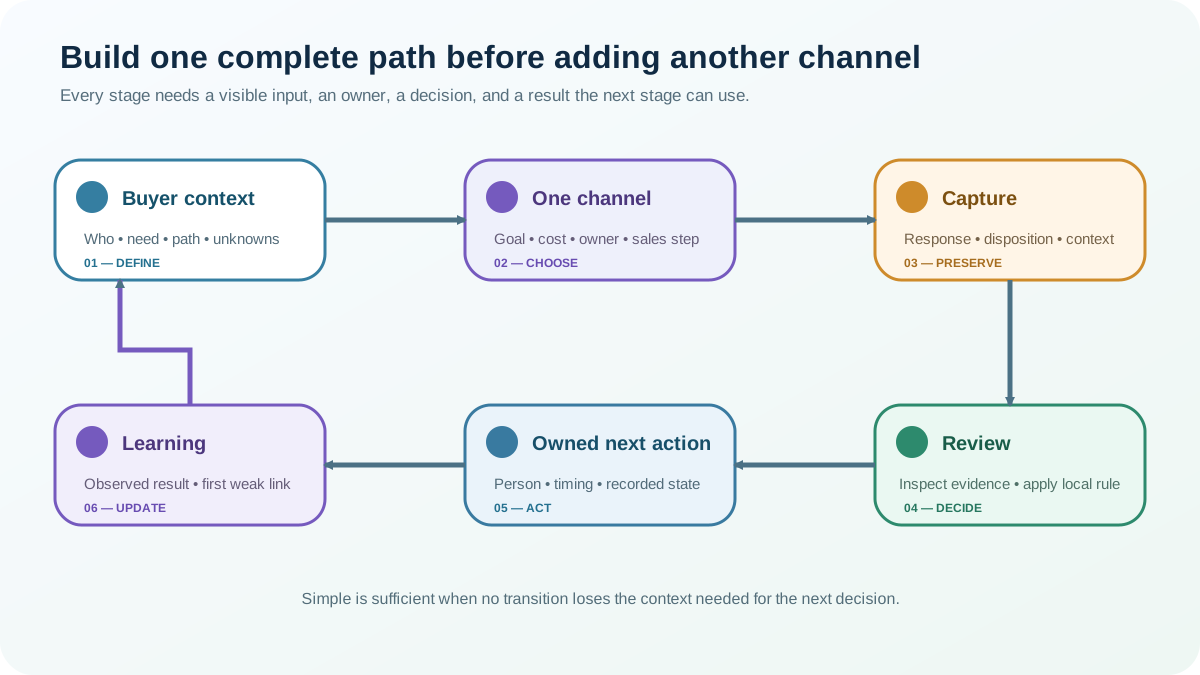
Now I draw the current path in plain verbs: identify, reach, capture, review, follow up, and learn, then I circle the first verb that has no reliable input, no named owner, or no visible output.
If people can discover the offer but cannot leave usable context, the gap is capture; if the team has candidate names but no rule for review or next action, the gap sits later and another source of names won't close it.
This diagnosis creates the next necessary input, and I ask you to choose one channel for the defined buyer and the specific missing connection instead of spreading a small team's ownership across several unfinished paths.
Build One Connected Lead Path
With the gap visible, I turn the target note into one marketing and sales action plan rather than starting a separate channel document, sales checklist, budget sheet, and dashboard that never agree on the same next step.
I use SBA guidance to give that plan a useful span: target market, sales steps, action channels, marketing and sales goals, costs, measurement, and an update cadence belong together, even though the guidance doesn't prescribe one universal funnel or threshold.
I call the plan complete enough to launch when you can show me that every action produces an input for the next owner and every cost or tool has a named job inside that path, not when every possible tactic has been listed.
Choose a Channel for the Buyer Context
Choose inbound when the working plan can connect buyer discovery to a deliberate response path, or choose outbound when the team can define candidate selection, contact preparation, and the response state it will review.
I don't ask which route is best in the abstract; I ask which one matches the target note, closes the diagnosed gap, fits the available sales step, and can be measured without pretending a generic benchmark applies.
Write the chosen channel beside its goal, cost category, owner, intended sales step, and review date, because the channel is only the entrance and the rest of the workflow still has to be built.
Connect the Offer to a Capture Mechanism
For an inbound path, capture may be a form, booking request, or direct reply; for an outbound path, capture may be a response or another recorded disposition that gives the owner enough context to decide what happens next.
Keep the tool stack boring at first: one place to preserve the captured context, one visible state for review, and one way to assign the next action are more useful than several disconnected features.
Before launch, I follow one test record with you from channel to capture to the intended sales step, asking who sees it, what that person can inspect, which cost is attached to the action, and where the result will return for review.
Qualify, Follow Up, and Repair the First Weak Link
The first-party OKKI Go use cases show one reviewed preparation path: start from a clear customer profile, search candidate companies, revise results, choose which companies to unlock, access selected contacts, draft outreach, and confirm before sending.
I place that sequence between target definition and human follow-up, not at the end of the funnel, because candidate search and outreach preparation do not establish buying intent, qualification, or a promised outcome.
The useful design pattern is review before irreversible action: let a person revise the candidate set, decide what to access, inspect the draft, and remain responsible for the send decision and the later qualification judgment.
A finished path finally gives the team something worth measuring: not activity in isolation, but whether records move through the states the plan named and whether the resulting evidence changes the next planning decision.
The SBA supports consistent measurement of marketing effectiveness, comparison of costs with generated revenue, maintenance of the plan, and updates based on what is working, while supplying no universal lead-generation benchmark.
So I schedule one review before launch and ask the team to bring state movement, costs, later revenue evidence where available, and the first observed break in the path rather than a decorative dashboard.
Set the Minimum Qualification Rule
Write a local rule that tells the reviewer what must be true before the record earns the next sales action, and name the evidence the reviewer must inspect instead of borrowing an unsupported universal score.
My rule separates three states that a tool can otherwise blur: candidate found, context reviewed, and next action authorized, with a person responsible for every move between them.
A candidate that fails the rule still creates information for the workflow, but it doesn't become verified intent or a qualified opportunity simply because the search, contact access, or draft preparation worked as described.
Assign Follow-Up Ownership and Timing
Once the reviewer authorizes a next action, put one person's name beside it and choose a timing rule the team can actually maintain, since the evidence supplies no universal outreach cadence.
The handoff note needs the captured context, the reviewer decision, the authorized next action, the owner, and the state that will be recorded after that owner acts.
Can you tell me whether a draft was confirmed, a send was authorized, and a response reached the right owner? If not, I stop the workflow at preparation because it still isn't a complete lead path.
Track Movement Between States
Count each locally defined state and the movement between states, then keep the channel cost and any generated revenue comparison attached to the same plan so the review doesn't confuse volume with effectiveness.
I also mark records that wait without an owner, fail the local qualification rule, or disappear after an authorized action, because those observations point to different repairs even when the total activity looks similar.
Choose a consistent review rhythm that fits the team's action plan, but don't present its timing or any transition rate as an authority-backed norm, since the evidence establishes the discipline of review rather than a benchmark.
Repair the First Failure Before Scaling
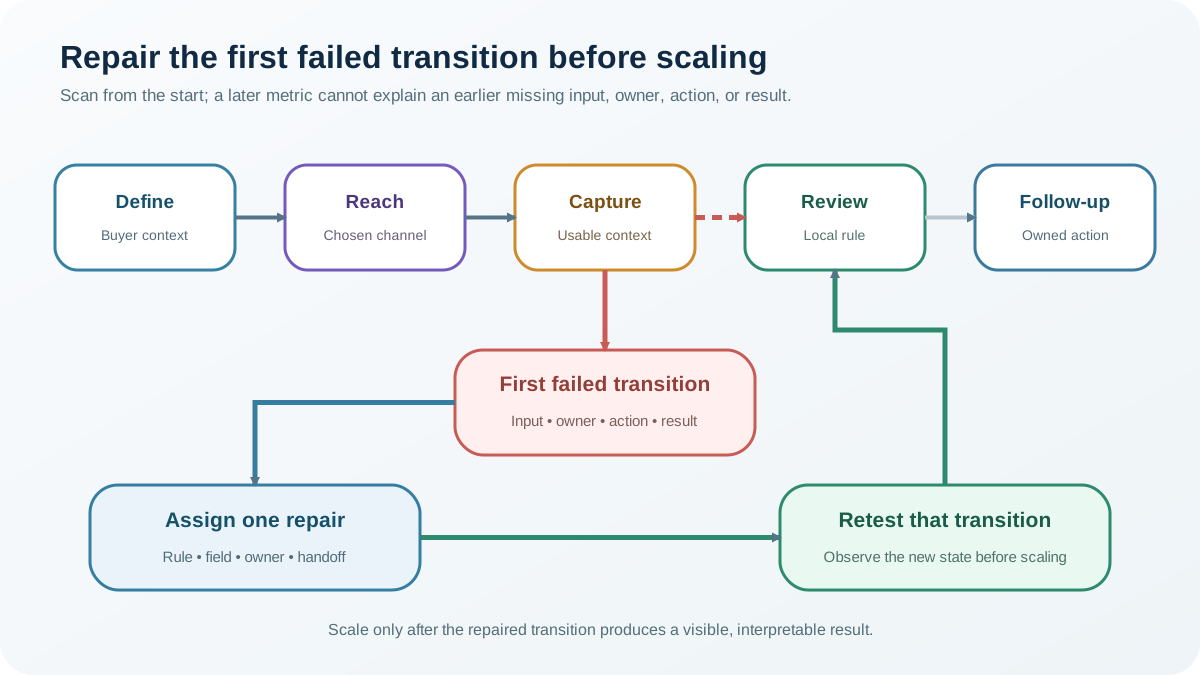
At the first review, find the earliest state where the intended input, owner, action, or recorded result failed, because a break near the start can make every later metric hard to interpret.
If the target assumption failed, return to research; if capture lost context, change the capture path; if review stalled, rewrite the rule or ownership; if follow-up vanished, repair the handoff and recorded state.
Add a second channel only after the first path has named owners, visible states, one observed failure, and an update made from that evidence, because otherwise scale just multiplies an unknown break.
Launch one path, not a portfolio of tactics: define the customer, choose the channel, connect capture, write the qualification rule, assign follow-up, and schedule the failure review; if reviewed search and outreach preparation is the missing middle, place OKKI Go inside that owned path without asking it to prove intent or qualification.
Frequently asked questions
What is lead generation?
For this workflow, lead generation is the connected work that moves a defined potential customer from one channel into captured context, a local qualification decision, owned follow-up, and an observable result; traffic, lists, or tools alone are incomplete.
Should a small team start with inbound or outbound lead generation?
Choose the route that matches the defined buyer, closes the diagnosed acquisition gap, fits an owned sales step, and can be observed with the team's current capacity, then complete that path before adding the other route.
Which tools are required for the first workflow?
Use only enough tooling to preserve captured context, expose a review state, assign a next action, and return a result to the plan; a feature list does not replace target research, qualification, ownership, or measurement.
How should a team qualify a lead?
Write a local rule that states what a reviewer must inspect and what must be true before a record earns the next sales action, then keep candidate found, context reviewed, and next action authorized as separate states.
Where does a reviewed company-search workflow fit?
The first-party OKKI Go use cases place reviewed candidate-company search, result revision, selected contact access, drafting, and confirmation before send between target definition and human follow-up; they do not establish intent, qualification, or promised outcomes.
Which metrics should the team track?
Track the locally defined states and movement between them, preserve the related costs, compare costs with generated revenue where the plan allows, and update the path from consistent review without treating any timing or rate as a universal benchmark.
Explore OKKI Go
- Explore the official product overviewReview the official overview of the product's documented company-search, contact, outreach-preparation, and email-workflow scope.Official OKKI Go resource ↗
- Review the official use casesSee the first-party sequence for candidate-company search, user review and revision, selected contact access, drafting, and confirmation before send.Official OKKI Go resource ↗