
A perfect script on the wrong account trains confidence, not targeting.

Why did a fluent opener still miss?
I've got a perfect script and a wrong account. Hypothetical. No named customer. The opener is smooth. The hypothesis isn't there. That's the episode I'm auditing.
I've been asked to review a labeled practice episode. Hypothetical: a polished cold opener, no named customer, and an account that should never have been in the queue. The script mentions a hiring spike I can't show on the record. The delivery is clean. I've heard worse openers land when inbound already wanted the call. This isn't inbound. As I'm using the term, outbound prospecting is the skill of picking an account you were not invited into, stating why that account belongs in the motion, and leaving a trace of that reason. Tools sit inside that definition. A CRM that treats lead status, assignment, conversion, and lead history as explicit record elements, not a one-step blur, can show whether I had a hypothesis. A sequencer can time a send. OKKI Go, used as a reviewed workspace, still can't invent the reason. Labeled assumption: the title on the record matches a buyer. Labeled assumption: the company still fits after a one-line check. If I can't show those, I'm rehearsing fluency on a false target. That's how I read how to improve outbound prospecting skills in this episode, and why I start with the record instead of the first sentence.
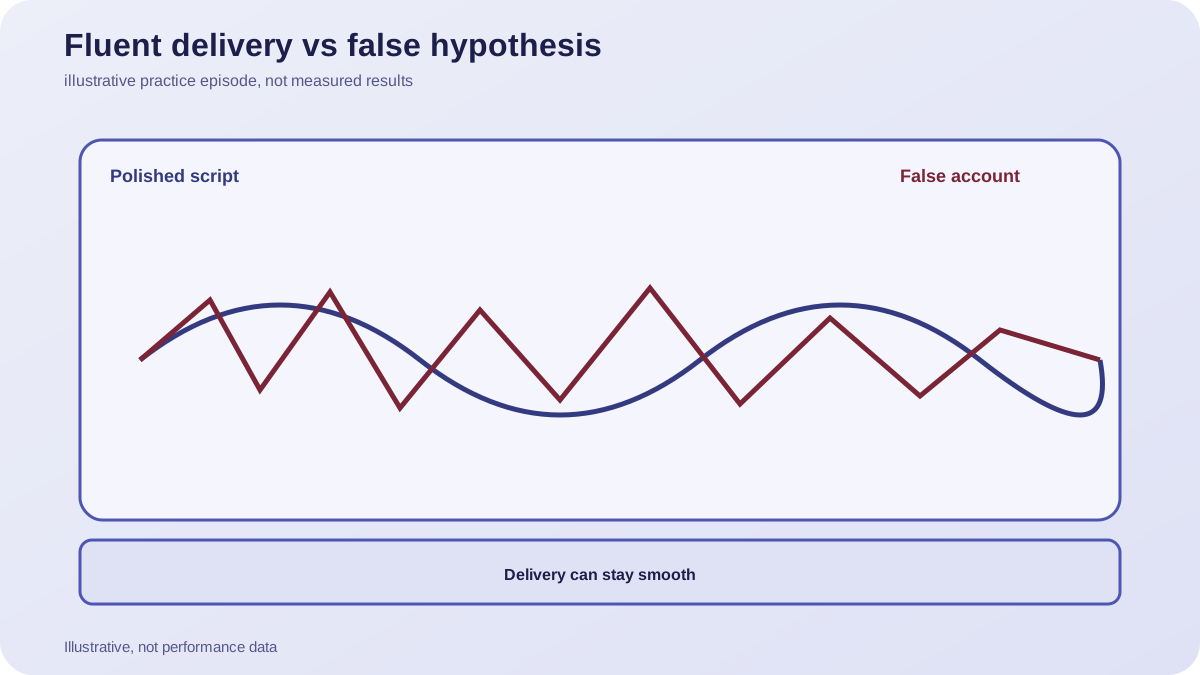
So what am I actually training? Fluency, or the reason this account was allowed into the queue?
Which record fields show the hypothesis?
I look at the lead record the way Salesforce documents it: status, assignment, conversion, and history as separate facts. If those fields can't hold the hypothesis, I don't have skill evidence. I've got a diary of activity. Data-quality practice still wants an owner for those fields, not a hope that someone will fill them later.
What constraints decide whether the touch was even allowed?
Inbound already raised a hand. Outbound I initiated. I don't coach them with the same opener drill.
The governing condition is whether I had a reason to touch this recipient on this channel, and whether I can explain it. UK ICO guidance on B2B direct marketing doesn't hand me a global playbook. It says obligations depend on channel, recipient type, personal-data use, transparency, and objections. That's my threshold for this labeled episode: if I can't name the channel, the recipient type, and how I'd honor an objection, I don't get to polish the first sentence. Labeled assumption: this contact is a business mailbox, not a personal one I'd treat as a consumer case. Labeled assumption: nobody has already objected. The usual mistake is collapsing inbound and outbound into more activity. Another is treating a stop request as an objection-handling win. Fluency on a false account is still a miss. The harder limitation is generated copy. It hides weak targeting behind sentences that sound researched. I catch that only if I ask for the hypothesis before I ask for a rewrite. That's the inbound versus outbound split I refuse to blur, and it's the constraint that decides whether more practice even counts as skill.
I've caught myself celebrating a tighter script while the ICP note is still blank. That's the miss I'm refusing to coach around.
Where inbound coaching has to stop?
The checkpoint is simple. Can I say, in one sentence, why this outbound touch is allowed and why inbound coaching wouldn't apply? If I can't, I'm mixing two jobs. I also can't skip the stop rule. An objection isn't a clever reply. It's a reason to leave the record alone.
Why does polishing the workflow hide a false target?
The failed path is polishing the workflow after the list is already wrong. I've watched a process that looks complete: find names, write copy, send, log activity.
It still skips the only step that would have killed the false account. Data quality, in the UK Government Data Quality Framework, isn't a one-time scrub. It's an ongoing management practice. It wants defined quality dimensions, measurement, improvement activity, and accountable ownership. If nobody owns the ICP field, the title field, and the why-this-account note, I don't have a process. I have a conveyor. The implication is blunt. I don't add another sequence step until I can point at who owns those fields and how we'd measure they're stale. Common FAQ energy shows up here. People ask whether they should rewrite the opener first. I don't. I ask whether the record would survive a quality review. That's the process question hiding under most how-to-improve-outbound-prospecting-skills FAQs, and it's why I keep the FAQ at the end tied to one attempt rather than a catalog of copy tricks. If discovery and enrichment ran without that ownership, I'd still call the workflow unfinished. I don't need a prettier checklist. I need a named owner and a way to kill a stale account before the send.
- Write the account hypothesis before company search continues
- Review candidates and correct the route when the fit story breaks
- Discover contacts only after the account still holds
- Confirm the draft, then record an honest disposition
Apollo's prospecting write-up still wants discovery, enrichment, and engagement to carry governance. If my process can't disqualify, it isn't a workflow. It's a send machine.
What changes when I audit qualification instead of the script?
I'm walking one hypothetical attempt, not a closed deal. Scenario: a mid-market manufacturer sits in the queue because an enrichment tag said expanding warehouse. Operating constraint: I may only use a channel I can explain, and I have to honor an objection if it arrives. I don't treat UK ICO guidance as a worldwide legal opinion. Input: a company name, a title, a draft opener, and a CRM lead with no conversion yet. Labeled assumption values: warehouse expansion is still true this quarter; the title is a buyer; the mailbox is a business contact. What I changed: I stopped scoring vocal confidence and started scoring whether those assumptions were written before send. Apollo's AI prospecting write-up splits the work into lead discovery, enrichment, and personalized engagement, and it flags governance, data quality, and measurement as implementation concerns. That's the shift I needed. Discovery and enrichment are not a license to personalize a false target. What I could observe: the attempt never converted. The honest disposition was disqualify for a broken hypothesis, not no answer, try a punchier opener. Decision: I coach the assumption, the disqualify, and the CRM note on this attempt before I rewrite the first line. The stop condition is different if this had been inbound asking for a demo. I wouldn't run this audit the same way. Qualification is that written hypothesis plus a stop rule I can actually use.
I didn't invent a win. I recorded a false target. That's the turning point.
If I can't qualify, I must be allowed to disqualify. Otherwise I'm just delaying a bad send.
Does the qualification note exist before confirm?
The detail I verify is whether the qualification note exists before the draft is confirmed. If it doesn't, I don't grade the copy. I've wasted enough reviews scoring tone on an account that should have been dropped.
What should I count after one attempt?
The observable result isn't a bigger pipeline number. I don't have one. It's a readable trail from hypothesis to disposition.
OKKI Go documents a reviewable path from natural-language company search through candidate review, route correction, contact discovery, draft preparation, human confirmation before sending, and visible send status. That's the metric shape I can actually coach. Did the search get corrected? Did a human confirm? Did send status show? Did the CRM status move to an honest disqualify instead of a silent retry? Those are metrics. Reply-rate theater is not. I still won't claim buyer intent prediction or autonomous sending. I only need the path to be inspectable on one attempt, because that's the unit I can coach without inventing a conversion rate I don't have.
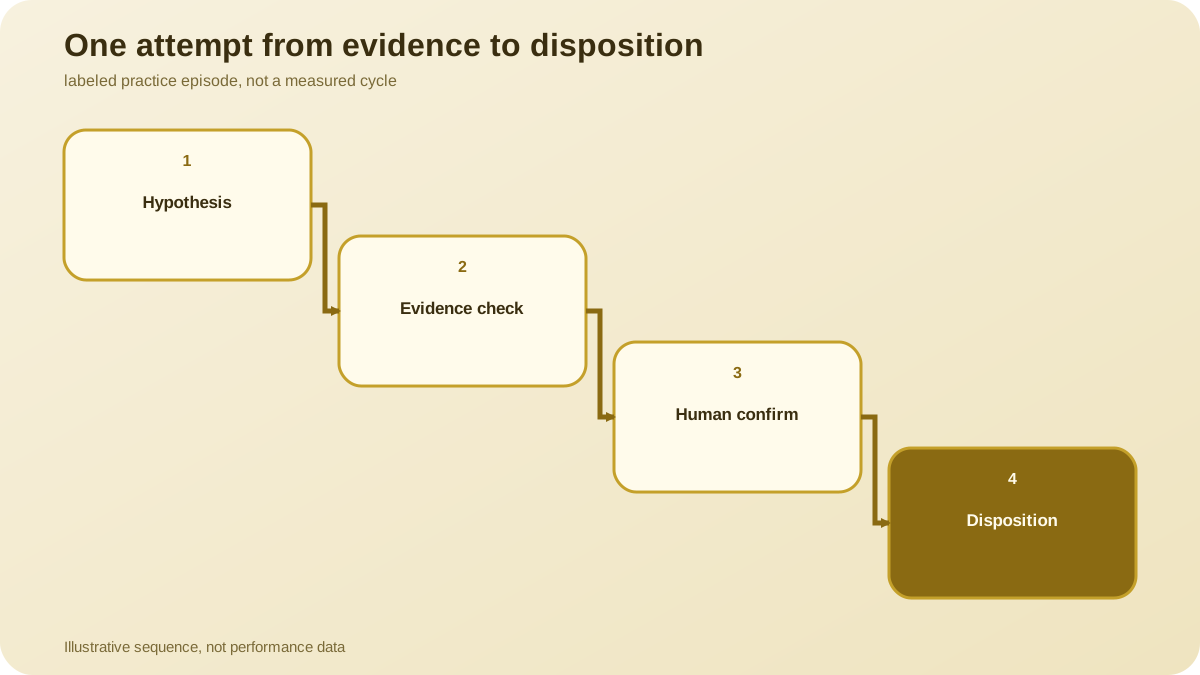
If I can't point at those states, I don't know whether skills improved. I only know the calendar filled.
What transfers to the next outbound attempt?
I keep the rule short. Coach the assumption, the disqualify, and the CRM disposition on one attempt before rewriting the opener.
It holds when I'm initiating contact, when generated copy makes a weak target sound researched, and when the CRM can store status, assignment, and history as visible fields. It doesn't hold when the buyer already requested the meeting. The strategies I actually transfer are boring on purpose. Write the hypothesis in the record. Name the quality owner for the fields I'm trusting. Check channel, recipient type, transparency, and objection handling before send. Keep human confirmation in the path. Record the disposition in the same sitting. OKKI Go belongs here as a reviewed workspace, not as a promise that copy will land. Apollo's split of discovery, enrichment, and engagement is useful only if measurement includes disqualifies. Volume without those checkpoints is just a prettier miss. That's what transfers when someone asks me how to improve outbound prospecting skills after a week of drills, and it's the only strategy I'll defend without a made-up close rate. If I skip those steps, I'm back to rehearsing a script on a false account, and I already know how that episode ends.
- Write the hypothesis before the opener
- Name who owns the fields you trusted
- Honor channel, recipient type, transparency, and objections
- Confirm, then disposition in the same sitting
This audit is for outbound I started. If a legal check for a market is still open, I stop. I don't invent a clause or a year to look thorough. What I can transfer is the sitting itself. I keep the company search, the route I corrected, the contact I unlocked, the draft I almost sent, and the confirmation I required, then I write the disposition before I stand up. Salesforce still treats status, assignment, conversion, and history as separate records, so I refuse to mash them into a feeling that the week was productive. If conversion never happens, the history still has to show why I stopped. If assignment never moved, I don't get to claim I worked the account. OKKI Go's visible send status is useful here only as a confirmation that a human said yes. It is not a score for the hypothesis. ICO business-to-business marketing pages still make me name the channel and the recipient type before I talk about skill. A pretty voicemail on a personal mailbox is not the same object as a business contact with a fair collection story. Apollo can list discovery, enrichment, and engagement as implementation concerns. I use that split as a coaching agenda, not as a vendor ranking. Discovery without a written hypothesis is just a longer list. Enrichment without a field owner is a rumor with extra columns. Engagement without an honest disposition is theatre. That's the practice I want another rep to steal. They can keep their own opener. They can't skip the record.
I also transfer the failure I already lived in this episode. I had a fluent script, a warehouse-expansion tag, and a title that sounded like a buyer. None of those were a hypothesis I could defend. The turning point was not a better first line. It was writing the assumption in the CRM before send, then watching it collapse when I couldn't name a current trigger. That's the result I actually got: a disqualify I can reuse, not a meeting I can brag about. I don't attach a close rate to that sitting, because I don't have one from a labeled scenario. I do have a cleaner next attempt. The next account has to survive the same questions. What changed at the company, who would own the pain, and which field am I trusting. If I can't answer, I don't send. If I can answer, I still confirm before the message leaves. That loop is how outbound prospecting skills improve for me now. Role play can wait until the record is honest. Tools can wait until the hypothesis is written. Metrics can wait until status, assignment, and history mean something I would show a manager. When someone asks for a faster way, I point them back to one attempt from evidence to disposition. That's the transferable piece. Everything else is costume.
Pull one attempt. Start at the hypothesis. End at the disposition. If I can't walk that path, I don't rewrite the opener. I keep the company search, the field I trusted, the confirmation, and the CRM note in the same sitting, because that is the only practice that changed what I send next. That is the work.
Frequently asked questions
What is the single most important factor in how to improve outbound prospecting skills?
Whether the rep can show the account hypothesis that justified the touch. Fluent delivery can't rescue a false target. I start there.
What do most buyers get wrong about how to improve outbound prospecting skills?
They treat improvement as more dials, better scripts, objection drills, and AI-polished copy. That hides a weak target behind sentences that sound researched.
How should you actually decide on how to improve outbound prospecting skills?
Coach the assumption, the disqualify, and the CRM disposition on one real attempt before rewriting the opener. If those three aren't visible, I don't grade the copy.
When does how to improve outbound prospecting skills matter most?
When you're initiating outbound, especially when generated copy makes a weakly checked account sound researched. Inbound that already asked for the meeting is a different job. I still write the hypothesis, check channel and recipient type, and store the disposition in the same sitting, because those records are how I tell whether the skill actually moved.
Explore OKKI Go
- Explore OKKI GoOpen the official product overview for company search, contact access, outreach preparation, and reviewed sending.Official OKKI Go resource ↗
- OKKI Go use casesInspect the documented path from candidate search and route correction through confirmation and visible send status.Official OKKI Go resource ↗