International lead generation is market-hypothesis management before it is list building or outreach volume.
The Illusion of Global Performance: Why Market-Specific Strategies Win
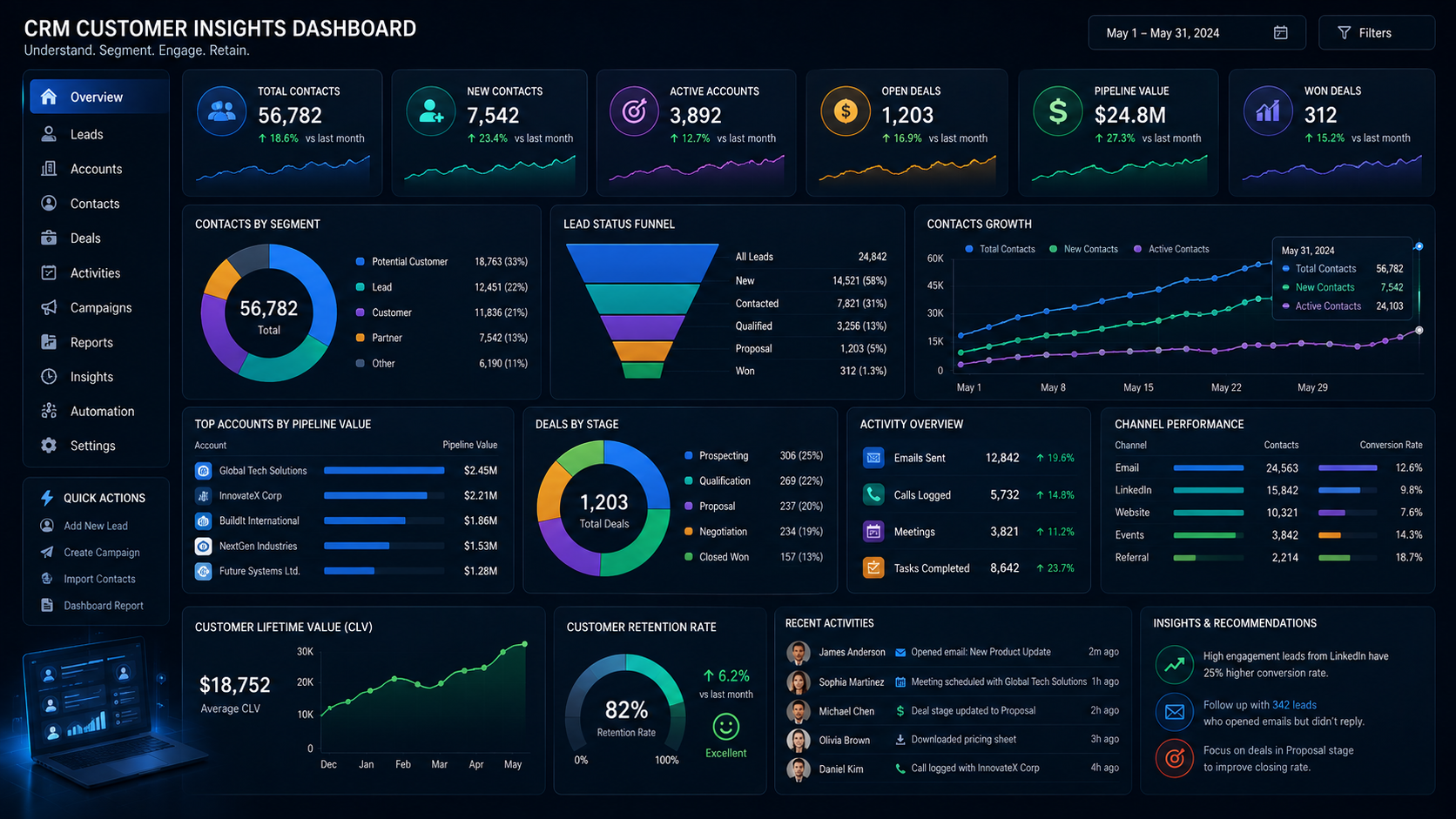
A global dashboard showing steady lead volume can mask critical underperformance in specific markets, leading to misallocated resources and missed opportunities. Effective international lead generation demands a granular, market-by-market approach, treating each new geography as a distinct hypothesis to test and validate. It's about deep local understanding, not just scaling existing tactics.
The temptation to treat international lead generation as a simple scaled version of domestic success is strong. A consolidated marketing dashboard might show a respectable global MQL-to-pipeline conversion rate, or an overall positive return on ad spend. Yet, beneath these aggregate numbers, individual markets often tell a story of feast or famine. One country might be thriving due to local market fit and channel efficacy, while another languishes with abysmal conversion rates, draining resources without contributing meaningfully to the pipeline.
This global-dashboard-local-failure scenario highlights a fundamental truth: international lead generation is market-hypothesis management before it is list building or outreach volume. Each market presents a unique combination of buyer behavior, competitive landscape, regulatory environment, and cultural nuances. A strategy that resonates in Berlin may fall flat in São Paulo or Singapore. Successful expansion requires acknowledging these differences and building systems that can adapt, test, and iterate on a local level, moving away from a one-size-fits-all mentality.
Market Choice: Beyond Simple Opportunity Scores
Selecting which international markets to pursue is the foundational step, yet it's often oversimplified. Relying solely on market size or GDP figures can be misleading. A more robust approach involves a structured assessment that combines macro indicators with micro-level feasibility and strategic alignment.
Decision test
Question | Required evidence | Stop condition |
|---|---|---|
What decision changes? | Named owner and action | No distinct action |
What supports it? | Source and observation date | Unknown identity or origin |
What happens next? | Reviewable next step | No accountable owner |
Initial Market Screening Criteria
Before committing significant resources to deep research, apply a filter of essential criteria. This helps narrow down the vast possibilities to a manageable shortlist. The relevant checks are: Strategic Alignment: Does the market fit your long-term company vision? Are there existing strategic partnerships or distribution channels that could be leveraged?; Product-Market Fit Potential: Is there a clear demand for your specific solution? Are local competitors well-entrenched, or is there an innovation gap you can fill?; Economic Stability & Growth: Beyond raw GDP, consider economic stability, purchasing power, and sector-specific growth rates relevant to your target industry; Regulatory & Political Climate: Assess ease of doing business, data privacy laws, import/export regulations, and political stability. High regulatory hurdles can significantly increase market entry costs; Logistical Feasibility: Can you deliver your product or service effectively? This includes supply chain, support infrastructure, and local staffing considerations.
Deep Dive Research: The ITA Framework
Once a shortlist of 3-5 markets is identified, a more thorough investigation is necessary. The International Trade Administration (ITA) emphasizes that "market research should assess product demand and destination conditions before market entry." Their guidance, detailed on the trade.gov website under "International Market Research" and "Conducting Market Research," provides a robust framework for this deeper analysis. Key areas to investigate include: This phase is about hypothesis validation. You're not just gathering data; you're actively seeking evidence to support or refute the assumption that your solution can gain traction in this particular market.
Demand Analysis: Is there a proven need for your product or service? What are the local substitutes? Are buyers accustomed to similar solutions, or will significant education be required?
Competitive Landscape: Identify direct and indirect competitors. Analyze their market share, pricing strategies, strengths, and weaknesses. What is your unique value proposition in this specific market?
Distribution Channels: How do companies in your industry typically sell and distribute their products or services? Are direct sales feasible, or are partners essential?
Landed Cost Competitiveness: For physical products, calculate all costs associated with getting your product to the customer, including tariffs, taxes, and shipping. For services, consider local labor costs and operational overhead.
Cultural and Business Etiquette: Understand local communication styles, decision-making processes, and negotiation tactics. This impacts everything from sales calls to marketing messaging.
Legal and Regulatory Environment: Beyond data privacy, examine intellectual property protection, contract law, and industry-specific regulations. The U.S. Small Business Administration (SBA) advises that "official export planning connects research, competitiveness, finance, digital trade, logistics, and execution" in its "Develop your export plan" guide. This holistic view is crucial for uncovering hidden risks and opportunities.
Localizing Your Ideal Customer Profile (ICP)
Your Ideal Customer Profile (ICP) is the cornerstone of effective lead generation. However, a globally defined ICP is rarely sufficient for international success. What constitutes an "ideal" customer can vary significantly across markets due to economic conditions, industry maturity, regulatory pressures, and cultural norms. Localizing your ICP is about adapting this profile to reflect the unique characteristics and needs of your target buyers in each new geography.
Adapting Persona Attributes
An ICP typically covers firmographic, technographic, and behavioral attributes. Each of these requires local scrutiny: The relevant checks are: Firmographics; Industry Verticals: Are the dominant industries the same? A vertical that's thriving in one country might be nascent or highly regulated in another; Company Size: What constitutes an "enterprise" or "mid-market" company in terms of revenue or employee count can vary widely. Local market dynamics might make smaller businesses more accessible or, conversely, larger enterprises the only viable target; Geographic Focus: Beyond the target country, consider regional concentrations within that country; Technographics; Technology Stack: Are your integration partners or complementary technologies prevalent in the local market?;
Digital Maturity: The adoption rate of cloud solutions, automation, or specific software categories can differ significantly; Behavioral & Psychographic (Persona-level); Pain Points & Motivations: While core business problems might be universal, their prioritization and the urgency to solve them can be culturally influenced; Decision-Making Process: Who holds the budget? Who influences decisions? Is the process hierarchical, consensus-driven, or individualistic?; Communication Preferences: Do they prefer email, phone, in-person meetings, or specific local messaging apps? What tone of voice resonates?; Regulatory Pressures: What local compliance challenges are they facing that your solution can address?.
Worked Example: ICP Localization Matrix
Worked Example: ICP Localization Matrix
ICP Attribute | Global ICP (Example: SaaS for HR) | Target Market: Germany (Example) | Target Market: Brazil (Example) |
|---|---|---|---|
Industry | Tech, Finance, Healthcare | Manufacturing, Automotive, Pharma (strong industrial base) | Agribusiness, Retail, Financial Services (growing digital transformation) |
Company Size | 500-5000 employees; illustrative revenue band of 50M-500M units | 250-2500 employees; illustrative revenue band of 25M-250M units (focus on Mittelstand) | 300-3000 employees; illustrative revenue band of 30M-300M units (emerging enterprises) |
Primary Pain | Talent retention, inefficient onboarding, compliance burden | Data privacy (DSGVO), skilled labor shortage, process optimization for efficiency | Bureaucratic complexity, talent acquisition, digital transformation, cost efficiency |
Key Decision Maker | VP HR, CHRO, Head of People | Personalleiter (HR Director), Betriebsrat (Works Council), CFO (cost control) | Gerente de RH (HR Manager), Diretor de Pessoas (People Director), CEO (strategic growth) |
Tech Adoption | High SaaS adoption, cloud-first | Moderate SaaS adoption, strong on-prem legacy, cautious cloud migration | Rapid SaaS adoption, mobile-first, openness to new tech |
Communication | Direct, data-driven, value-focused | Formal, precise, detailed, emphasis on security and reliability | Personal, relationship-driven, flexible, emphasis on innovation and agility |
Compliance Focus | GDPR, CCPA | DSGVO (GDPR equivalent), Works Council agreements | LGPD (GDPR equivalent), labor laws specific to Brazil |
To systematically localize your ICP, create a matrix that compares your global ICP attributes against the specific nuances of a target market. This matrix forces a deliberate comparison, revealing where your existing ICP holds true and where it needs adjustment. The localized ICP then guides your entire lead generation strategy, from messaging to channel selection.
Data Sources and Compliance for International Reach
Acquiring accurate contact data is crucial, but doing so across international borders introduces significant complexities, primarily around data privacy and compliance. What's permissible in one region can lead to severe penalties in another. For each source, record provenance, observation date, permitted use, geographic coverage, correction path, and the market rule that governs activation. A reachable address is not enough; the team still needs evidence of account fit, current responsibility, and an appropriate outreach basis.
Navigating Regional Data Regulations
GDPR (EU/EEA): Requires a lawful basis for processing personal data (e.g., legitimate interest, consent). Transparency is key, and individuals have rights over their data. This impacts how you collect, store, and use contact information.
LGPD (Brazil): Brazil's General Data Protection Law mirrors many GDPR principles, requiring consent or other lawful bases for processing.
CCPA/CPRA (California, USA): While primarily consumer-focused, these laws impact B2B interactions that involve personal data of California residents.
PIPEDA (Canada): Personal Information Protection and Electronic Documents Act governs how private sector organizations collect, use, and disclose personal information.
The global landscape of data privacy laws is fragmented. While GDPR (General Data Protection Regulation) is widely known, many other countries have their own stringent regulations. Ignorance is not a defense, and a robust compliance strategy is essential. The Information Commissioner's Office (ICO) in the UK offers specific guidance on "Business-to-business marketing" on its ico.org.uk website. It clarifies that UK B2B marketing rules depend on the channel, recipient type, whether personal data is involved, the lawful basis for processing, transparency, and the right to object.
For example, while cold calls to corporate lines might have different rules than those to personal mobiles, email marketing generally requires a clear opt-in or a demonstrable legitimate interest, with clear unsubscribe options. This is UK guidance and not worldwide legal advice; requirements vary significantly by market and necessitate local legal review. Always consult local legal counsel to ensure full compliance in each target market. When sourcing data, prioritize reputable providers that can demonstrate their compliance practices for specific regions. Avoid grey-area data sources that promise vast quantities of contacts without clear provenance.
This is where tools like OKKI Go can assist in ethical and efficient contact discovery within compliant frameworks. OKKI Go supports natural-language company search and candidate review, helping users identify relevant organizations and individuals. Once targets are identified, it facilitates contact discovery and draft preparation for outreach. Crucially, OKKI Go requires user confirmation before sending any communications and provides visible send status, ensuring that outreach is deliberate, transparent, and user-controlled, aligning with best practices for data handling and communication. It focuses on empowering the user to make informed decisions about who to contact and how, without making promises about accuracy, coverage, autonomy, revenue, meetings, or outcomes.
Crafting Your Channel Mix and Message for Local Impact
Once you know who you're targeting and where they are, the next challenge is how to reach them and what to say. An effective international lead generation strategy utilizes a localized channel mix and messaging that resonates culturally and contextually.
Channel Effectiveness by Market Archetype
Different channels perform differently based on market maturity, digital penetration, and cultural preferences. A channel that's highly effective in one market might be ignored in another. The Channel Effectiveness by Market Archetype table organizes the decision across Channel, High-Tech/Digitally Mature Market (e.g., US, UK, Nordics), Emerging/Relationship-Driven Market (e.g., LATAM, SE Asia), Conservative/Regulated Market (e.g., Germany, Japan). Read each row as a bounded comparison, then confirm the source, unit, observation date, and local applicability of every input before using it to approve investment or external action.
Channel Effectiveness by Market Archetype
Channel | High-Tech/Digitally Mature Market (e.g., US, UK, Nordics) | Emerging/Relationship-Driven Market (e.g., LATAM, SE Asia) | Conservative/Regulated Market (e.g., Germany, Japan) |
|---|---|---|---|
Paid Search (SEM) | High effectiveness, competitive CPCs | Moderate to High, lower CPCs initially, growing | Moderate, high intent, precise targeting |
Paid Social (LinkedIn) | High, strong B2B professional network | Growing, good for brand building, less direct conversion | Moderate, emphasis on professional content |
Content Marketing/SEO | High, strong demand for educational content | Moderate to High, building trust and authority | High, demand for detailed, authoritative content |
Email Marketing | Moderate, high volume, requires strong personalization | High, if permission-based and personalized | Moderate, strict compliance, opt-in preferred |
Webinars/Virtual Events | High, convenient, scalable | Growing, good for engagement, localized content | Moderate, high attendance for niche topics |
Local Events/Trade Shows | Moderate, highly targeted, costly | High, essential for relationship building | High, especially for industry-specific events |
Referral/Partner Programs | High, trusted source | Very High, critical for market entry | High, strong reliance on trusted networks |
Direct Mail | Low, niche use cases | Low, but can be high impact for VIPs | Niche, can be effective for high-value targets |
Actionable List: Multi-Channel Strategy Elements
A successful channel mix is never static. It requires continuous monitoring, testing, and adjustment based on performance metrics and evolving market dynamics. The relevant checks are: Prioritize Localized Content: Translate and transcreate (adapt culturally) your core marketing assets. Don't just translate; ensure cultural relevance, tone, and examples resonate with the local audience. This applies to website copy, landing pages, case studies, and ad creatives; Research Local Platforms: Beyond global giants like LinkedIn, investigate local professional networks, industry forums, and review sites. In some markets, WhatsApp Business might be a viable communication channel, while others prefer traditional email;
Localize Paid Ad Campaigns: Use local language keywords, culturally appropriate imagery, and ad copy that speaks to localized pain points. Set appropriate geo-targeting and budget allocations based on market potential and CPCs; Embrace Local Partnerships: Strategic alliances with local influencers, industry associations, or complementary businesses can provide immediate credibility and access to established networks, especially in relationship-driven markets; Test and Iterate Messaging: Develop distinct value propositions and messaging frameworks for each market. Run A/B tests on headlines, calls-to-action, and unique selling points to see what truly resonates; Consider Local SEO: Beyond language, optimize for local search engines (e.g., Baidu in China, Yandex in Russia) and local business directories.
Lead Routing, Language, and Localized Sales Enablement
Generating leads is only half the battle; effectively processing, qualifying, and assigning them to sales is where many international efforts falter. A robust system for lead routing, coupled with appropriate language support and localized sales enablement, is critical for converting international interest into pipeline.
Defining Lead Qualification and Routing Rules
A global MQL definition might not hold up. What constitutes a qualified lead in New York might be a tire-kicker in Tokyo. The relevant checks are: Market-Specific MQL/SQL Definitions: Refine your qualification criteria (e.g., BANT - Budget, Authority, Need, Timeline) to reflect local market realities. What's a realistic budget for a German SME versus a Brazilian startup? Who holds "authority" in a Japanese conglomerate versus an American tech firm?; Regional Lead Scoring Models: Develop lead scoring models that account for local demographics, firmographics, and engagement behaviors.
A website visit from a specific country or an interaction with localized content might carry different weight; Automated Routing Logic: Implement CRM or marketing automation rules to automatically assign leads to the correct sales team or representative based on geography, language preference, company size, or industry. Ensure these rules are clear, auditable, and have fail-safes; Service Level Agreements (SLAs): Establish clear SLAs for lead follow-up times for each region. Cultural expectations around response times can vary; what's acceptable in one market might be considered slow or disrespectful in another.
Actionable List: Language and Cultural Nuance Checklist
Native Language Sales Reps: Where feasible, assign leads to sales representatives who are native speakers of the local language and are familiar with the cultural nuances of that market. This builds trust and avoids misunderstandings.
Localized Sales Collateral: Ensure all sales materials (presentations, proposals, product sheets, case studies) are not only translated but also culturally adapted. Use local examples, testimonials, and imagery.
Cultural Training for Sales Teams: Provide training on local business etiquette, negotiation styles, communication norms (e.g., direct vs. indirect communication, importance of hierarchy), and common cultural pitfalls.
Time Zone Management: Implement systems that account for time zones when scheduling meetings or follow-ups. Respect local holidays and business hours.
Measurement of Language Efficacy: Track conversion rates for leads handled by native speakers versus non-native speakers, or for localized versus generic content, to continuously improve your approach.
Legal and Contractual Review: Ensure that any proposals or contracts comply with local legal requirements and are presented in a clear, culturally appropriate manner.
Effective communication goes far beyond mere translation. It requires cultural sensitivity and an understanding of local business etiquette. Ignoring these operational details can lead to a significant drop-off in conversion, even with high-quality leads. The hand-off from marketing to sales must be seamless and culturally intelligent.
Measuring Success: Metrics for a 90-Day Market Test
International expansion is a series of calculated risks. To mitigate those risks, each new market entry should be treated as a hypothesis, subjected to a focused 90-day test with clear, actionable metrics. This allows for rapid iteration or strategic pivot before significant resources are committed.
Common Failure Modes
Many international lead generation initiatives fail not from a lack of effort, but from a lack of clear measurement and an inability to adapt. The relevant checks are: Vanity Metrics: Focusing on top-of-funnel volume (e.g., website traffic, gross lead count) without correlating it to pipeline or revenue; Ignoring Local Context: Applying global benchmarks without adjusting for local market conditions, competitive intensity, or average deal sizes; Premature Scaling: Pumping more budget into a market before validating the core hypothesis and achieving repeatable success at a smaller scale; Siloed Operations: Marketing generates leads, but sales doesn't follow up effectively, or vice-versa, due to poor communication or misaligned incentives; Lack of Patience: Abandoning a market too quickly if initial results aren't stellar, without understanding the ramp-up time required for specific channels or relationship building.
Decision Metrics
For a 90-day market test, focus on metrics that provide early indicators of market fit and channel effectiveness, rather than long-term revenue. The relevant checks are: Lead-to-MQL Conversion Rate (Market Specific): How effectively are raw inquiries turning into qualified leads based on local ICP criteria?; MQL-to-SQL Conversion Rate (Market Specific): What percentage of qualified leads are accepted by sales and deemed sales-ready? This is a critical indicator of sales and marketing alignment; Sales Accepted Lead (SAL) Velocity: How quickly are SALs moving through the initial stages of the sales process? This indicates sales team capacity and lead quality; Cost Per MQL (Market Specific): What is the average cost to acquire a qualified lead in this market?
Compare this to your domestic benchmarks, adjusting for local market conditions; Channel Performance by Market: Which specific channels (e.g., paid social, content, referrals) are generating the most MQLs and SQLs in this market?; Website Engagement Metrics (Localized Content): Dwell time, bounce rate, and conversion rates on localized landing pages indicate content relevance; Sales Feedback & Win/Loss Analysis: Qualitative feedback from local sales teams on lead quality, common objections, and competitive landscape is invaluable; Initial Pipeline Value & Velocity: While not full revenue, track the early stages of pipeline generation to estimate potential future returns.
Boundary Conditions
Define clear "go/no-go" boundary conditions before the 90-day test begins. What constitutes success? What triggers a pivot or withdrawal? These boundary conditions provide objective criteria for decision-making, reducing emotional bias in assessing market performance. The relevant checks are: Success Threshold: E.g., "Achieve an MQL-to-SQL conversion rate of at least 15% with a Cost Per MQL below X, generating at least Y in qualified pipeline within 90 days."; Pivot Trigger: E.g., "If Cost Per MQL is 2X higher than benchmark, or MQL-to-SQL is below 5%, review channel mix and ICP assumptions."; Withdrawal Condition: E.g., "If no SQLs are generated within 60 days despite optimizing channels and messaging, or if compliance risks are unmanageable.".
Frequently asked questions
How should an ICP change across international markets?
Keep the core problem and value logic, but retest company attributes, buyer roles, exclusions, proof requirements, language, serviceability, and route to market in each country. A domestic title or size band may not represent the same buying structure elsewhere.
Which sources are useful for international lead generation?
Combine official market and trade sources with company websites, registries, industry associations, approved data providers, and first-party responses. Record provenance and observation dates because no single source establishes both market fit and current contact relevance.
How should a team localize international outreach?
Localize the business context, terminology, evidence, channel, sender identity, and response path, not just the words. The message should make a bounded relevance claim and give the recipient a clear way to correct routing or decline contact.
What should a market test measure besides lead volume?
Track accepted-account rate, verified-contact rate, response quality, disqualification reasons, time to a responsible owner, opportunity progression, compliance exceptions, and cost per qualified conversation. These measures show where the market hypothesis is breaking.
When should an international lead-generation test stop?
Use stop conditions tied to unsupported delivery, unmanageable compliance risk, persistently poor account fit, inability to serve the market, or weak economics after documented iterations. A fixed review date prevents indefinite optimization of a bad market hypothesis.