
A small business needs a deliberately small lead system whose channels fit the buying path, weekly capacity, and first visible funnel constraint, because a narrow portfolio with owned handoffs is easier to operate, diagnose, and improve than a crowded plan built from individually plausible tactics. The useful question is not which channel looks popular, but which transition the business can own from relevant attention to a qualified next step. This guide treats cash and attention as separate limits, distinguishes organic compounding from paid testing, and uses one bounded review cycle to reveal whether reach, capture, fit, or follow-up is the first constraint. It also shows where reviewed outbound research can support a portfolio without becoming the entire strategy. The aim is not a universal budget, channel ranking, or preset 30-day result. It is a smaller operating plan whose assumptions, owners, evidence, and stop conditions are explicit enough for an owner-operator to choose the next repair before spending more.

Define the Small-Business Lead System
Monday morning. I've got a modest budget, a half-finished website, three social accounts, a trade-show invitation, and someone telling me to start ads. Every option sounds plausible. Together, they can become a leak. For a small business, lead generation isn't collecting names or buying attention. It's the connected work of attracting a defined customer, capturing a way to continue the conversation, deciding whether the situation fits, and assigning follow-up someone can deliver. I don't ask which tactic is popular. I ask which transition the business needs to create. A local repair service may need discovery followed by a booked estimate. A specialist exporter may need a researched account followed by a relevant conversation. A repeat-purchase shop may need an offer that earns email permission and a later visit. The path differs, but each stage still needs an observable entry, an owner, and a next action. That operating view keeps attention separate from evidence that a buyer can and should move forward.
Name the Customer and Buying Path
I write the customer hypothesis before choosing a channel: who has the problem, where it appears, what triggers a search, who influences the choice, and what evidence reduces risk. Government small-business guidance points to demand, market size, location, saturation, and alternatives, while target-market guidance stresses definition, segmentation, and research. These are prompts for a defensible starting point, not proof that buyers are waiting. Then I mark the buying path. Attention is exposure. A lead has offered a usable route for continued contact. A qualified lead also matches agreed fit and timing conditions. Collapsing those states into one number can make a busy campaign look healthy while producing no worthwhile conversations. The customer and path come first; every channel still needs capture, qualification, and follow-up. The distinction tells me what must be observed before I call a contact qualified.
Start With the Operating Constraint
My working budget has two currencies: cash and attention. I can afford a channel on paper and still be unable to operate it. A newsletter needs useful ideas, editing, a send routine, and someone to handle replies. Search content needs subject knowledge and patience. Events consume preparation and follow-up time. Paid campaigns need landing-page work, monitoring, and room to learn. Outbound needs research and human review. So I write a weekly capacity beside each option: owner, protected hours, displaced task, and response plan when demand arrives. Capacity is part of channel fit. Then I set a cash ceiling for the cycle. It isn't a universal benchmark; it is a local limit that protects delivery, support, and follow-up work.
Find the Current Funnel Leak
Next, I trace the first bad transition instead of declaring that the business needs more leads. If relevant people rarely reach us, the constraint sits in attraction or targeting. If they visit but don't leave a useful contact route, capture is weak. If many contacts arrive but few fit, the promise, targeting, or qualification rule needs work. If qualified conversations wait days for a reply, follow-up capacity is the bottleneck. Buying more traffic for broken capture creates more anonymous visits; expanding a list while follow-up is unowned creates a larger queue, not a stronger pipeline. I also note what I can't observe. A referral may create an offline call, a buyer may return later, or a partner may influence the choice without appearing as the source. I name those unknowns instead of forcing neat attribution. A simple stage sheet with stable definitions, counts, and notes helps locate the first constrained handoff, so the budget can fund a specific repair rather than unrelated ideas.
Choose a Small Channel Portfolio
I don't rank channels in the abstract. I score the job each one must do. Referral partnerships can transfer trust but require a credible partner and reciprocal value. Search and educational content can meet existing questions, yet they demand production consistency and may compound slowly. Community work and events can create rich conversations, but they use founder time. Paid search or social can buy controlled exposure, provided the offer, audience, landing path, and monitoring capacity are ready. Targeted outbound can reach a narrow account set without waiting for discovery, but relevance and review are non-negotiable. If that outbound route fits the customer hypothesis, I can give OKKI Go a product description, buyer type, target country, and exclusions. It returns contextual candidate companies; I review the list, revise the search conditions, and selectively unlock only after that confirmation. The usable result is a reviewed account-research set and a refined search route, not proof of demand or an automatic declaration of lead quality. That distinction matters because outbound provides controlled access to a narrow market; it does not replace attraction, capture, qualification, or follow-up elsewhere.
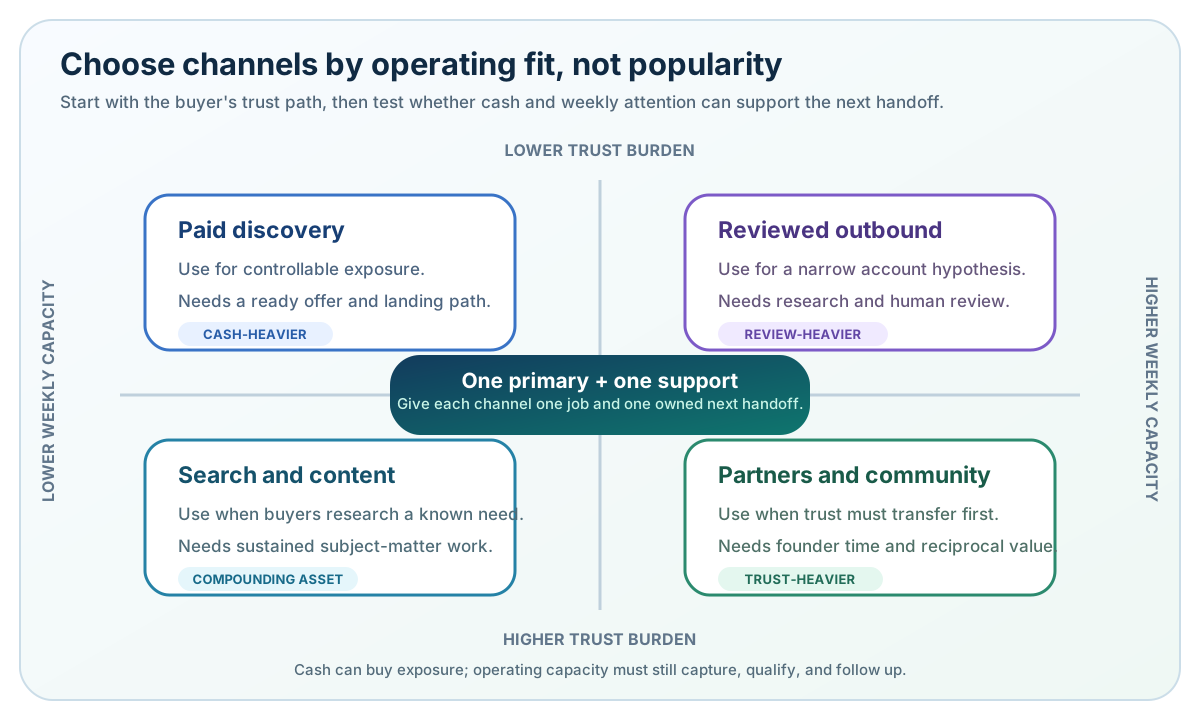
Match Channels to Trust, Reach, and Capacity
The portfolio I can defend is usually small: one primary channel that creates needed reach or trust, plus one supporting channel that makes it work better. A referral-led service might pair partner outreach with a concise proof page. A search-led business might pair high-intent content with email capture and prompt follow-up. A niche B2B seller might pair reviewed account outreach with a reference page answering the buyer's first risk question. Organic and paid routes aren't moral opposites. Organic work often exchanges cash for sustained attention and accumulated assets; paid work exchanges cash for faster, controllable exposure. Either can waste resources when the next transition is weak. I choose by customer behavior, trust burden, speed, cash limit, and weekly ownership. If two candidates tie, I prefer the one whose inputs and next state I can observe. Measurement is easier when each channel has a named job. The support channel should remove a known trust or continuity gap, not exist merely to make the plan look diversified.
Connect the Minimum Lead System
A channel earns budget only when its next handoffs exist. I write the minimum chain on one page. Attraction names the signal that brings the right person or account into view. Capture records enough context to continue without demanding unnecessary information. Qualification applies a few observable fit conditions and preserves unknowns. Follow-up assigns one owner, a response window, and an allowed next action. The record can be a plain spreadsheet for a very small team if it reliably shows source, stage, owner, last action, and next decision. It doesn't need an enterprise stack. For a reviewed outbound case, the chain can continue after an account is approved. I provide company context and product material to OKKI Go; it can surface contact clues and prepare a contextual draft. I confirm the recipient, subject, and body before sending. The usable result is a human-approved outreach action with visible send status or failure reasons, not an autonomous sale or inferred consent. The handoff is complete only when the next person can see why the record advanced and what evidence would reverse the decision.
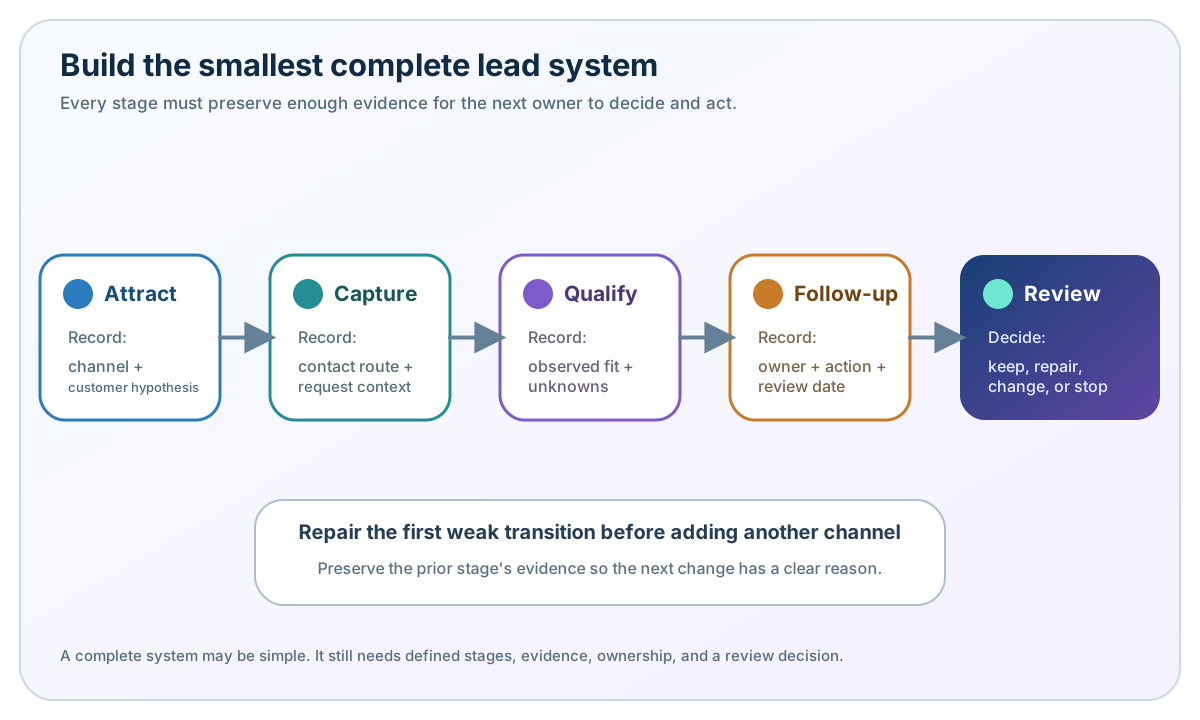
Link Attraction to Capture and Qualification
I make each transition testable with a few fields. For attraction, I record the channel and customer hypothesis. For capture, I record what the person asked for or what account evidence justified research. For qualification, I separate observed facts from assumptions and unknowns. For follow-up, I record the owner, promised action, and review date. This prevents raw volume from becoming the only story. Visits can rise while capture deteriorates; names can increase while fit weakens; a sales queue can grow while response time slips. Metrics should follow the system: observable relevant reach, capture completion, qualification decisions, owned follow-ups, and stage movement. Cost belongs beside that context, not as a universal benchmark. Preserving the previous stage's evidence helps repair the first bad handoff rather than blaming the final outcome on the most visible channel. I keep stage definitions unchanged during the cycle so a rising count cannot conceal that the meaning of a lead has shifted.
Run One 30-Day Review Cycle
Thirty days is a practical management boundary for a first field test, not a promise that every channel matures in a month. Before day one, I write the customer hypothesis, primary and supporting channels, cash ceiling, weekly hours, stage definitions, owners, and stop conditions. During the cycle, I protect the routine and log exceptions without redesigning the plan after every quiet day. Organic work may need longer, so I judge whether the promised work happened and whether the intended transition became observable; I don't pretend a delayed commercial result has arrived. Paid tests may expose problems faster, but speed doesn't remove the need to inspect fit and follow-up. At review, I compare the actual route with the plan: Did the right audience appear? Could they continue? Were qualification decisions consistent? Did an owner act? The cycle remains useful even when the final sales result is uncertain.
Diagnose the First Constraint Before Expanding
My review ends with one of four moves: keep the system stable, repair one transition, change one channel assumption, or stop the route. I don't add a third channel because activity felt slow. Weak reach suggests a targeting or distribution problem. Strong reach with weak capture points to the offer or continuation path. Many contacts with weak qualification suggest the promise is attracting the wrong situation. Qualified leads with poor follow-up expose capacity or ownership. Only after diagnosis do I alter one variable and record the new hypothesis. For the next cycle, choose one primary and one supporting channel. Give each a job, cash and time limits, a complete next handoff, and a review date. If the team can't name the transition an extra channel would improve, keep it off the plan. The review must name the observed constraint and next test in writing, because memory tends to reward the busiest channel.
Frequently asked questions
What is lead generation for a small business?
It connects attraction, capture, qualification, and owned follow-up.
Which lead generation channel should a small business start with?
Choose one operable customer-aligned channel, then add one support.
How much should a small business spend on lead generation?
Set cash and attention limits that protect delivery and follow-up; no universal amount applies.
What should a small business measure during the first 30 days?
Track work, stage movement, and cost. Thirty days is a review boundary, not a promise.
Can a spreadsheet support a small lead generation system?
Yes, if it records source, stage, fit, owner, action, decision, and review date.