
A new source helps only after you can test what you still do not know.

Name the unknown
A fresh export can look like progress and still leave you empty-handed. You added names. You still cannot say who can buy, or why this source should exist. That is the usual miss in new lead generation.
The term is not a synonym for a bigger file. It is the work of testing a source or audience you have not proven yet. What's actually new? The unknown, not the row count.
The clerical habit is easy to defend. Fresh list. New form. Another paid placement. Those moves restock inventory. They do not open demand.
A commercially new lead comes from a place whose need, ability, and willingness are still open. If you cannot name what you do not know, you are filing, not exploring.
UK guidance on direct marketing asks you to plan data protection before collection, collect fairly and transparently, hold a valid basis, and honor objections or opt-outs. That planning sits inside the definition. A harvest that cannot explain those points is not a clean experiment.
Growth-experiment documentation belongs in the same frame. A marketing plan that ties the target market and your advantage to actions, goals, a budget, and a review is the minimum record of what was new and when you will stop.
- An unproven source or audience, not a newer export of a known one
- A written unknown, a capped spend, and a dated review
- Collection planning that can explain fairness, a valid basis, and opt-outs
- A first-time cohort you can report without mixing it into a working list
Inside the term
Keep the word attached to first-time sources and first-time audiences. Do not stretch it into a software ranking. If you cannot point to an unknown, a learning budget, and a stop rule, you are doing more of the same under a newer label.
Run one slice
You do not need every tactic you have ever saved. You need one unproven slice and a way to falsify it. Can you name that slice today?
A usable strategy is a new-market or new-segment test plan. You name the slice, the discovery path you will try, and the unknown you will accept as unanswered for now.
Australian government guidance still asks you to research needs, ability and willingness to buy, segments, buying habits, and the channels people use to find offers. That research turns a pile of company names into a hypothesis you can kill.
The workflow is sequential, not a channel menu. Start from a user or offer context. Assemble candidate companies. Review and revise. Unlock a smaller selected set. Then find contacts, draft outreach, and confirm before anything is sent.
OKKI Go can keep a first dump of candidates in a reviewed workspace. That dump is still not qualified demand. The unknown you are testing still has to be written down.
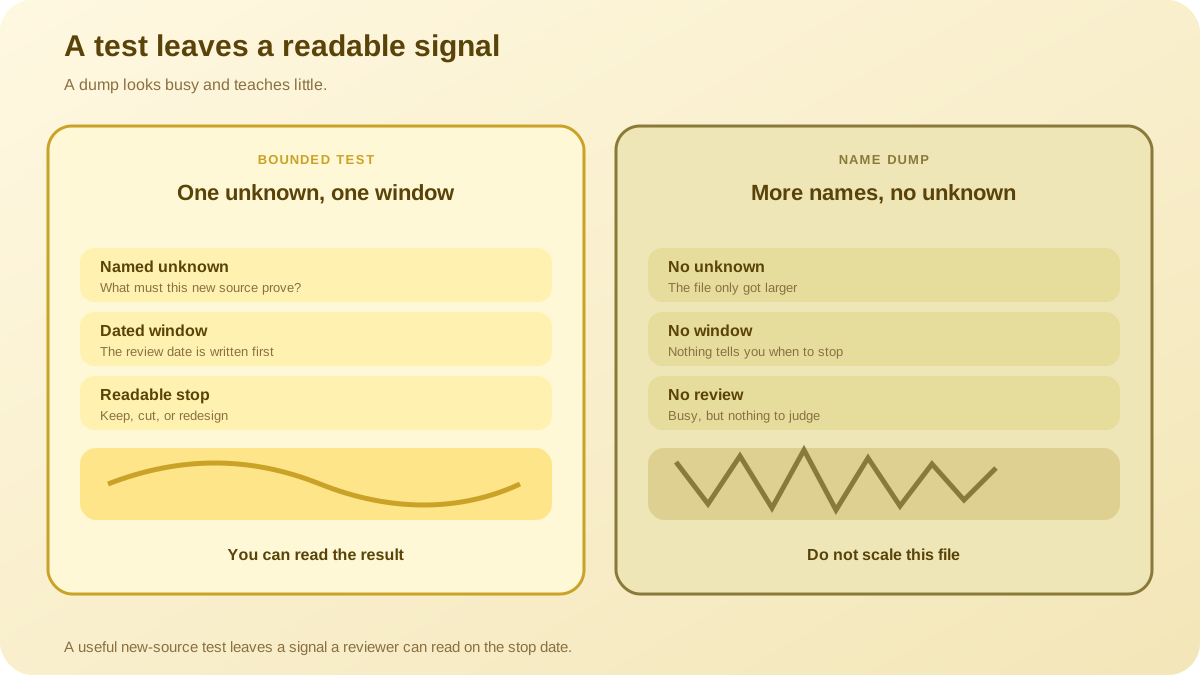
- Write the unknown and the audience slice you have not validated
- Research need, ability, willingness, habits, and discovery channels
- Keep the first-time cohort on its own track
- Review candidates, then contacts and drafts, before send
- Set the evidence that would end the test
Fit before send
The check that matters is not volume. It is whether the new slice still has a fit story after research. If you cannot say why this group would buy, or how they would find you, the strategy is unfinished. Tools can speed candidate assembly. They cannot finish that check for you.
Cap the tool
The experiment frame holds when the source or audience is genuinely unproven. It breaks when you already know the market, or when a tool's output is treated as if it were research.
U.S. Small Business Administration guidance puts the order of work first. Market research is how you define customer demand, audience characteristics, market limits, and competitive conditions before you invest in acquisition. That is the threshold.
If you have not done that work for the new slice, a sourcing tool is not generating anything commercially new. It is accelerating a guess.
Tools belong here as instruments. They help you assemble, filter, and record a first-time cohort. They do not replace the research gate, and they do not earn a ranking page.
If you use OKKI Go to assemble candidates, treat the output as a starting cohort, not as proof of demand.
Lead-source reporting that isolates first-time cohorts keeps the tool honest. Mix the new names into a working stream and you will credit the old source for new volume, or blame the new source for noise it did not create.
Isolation also protects compliance learning. If objections and opt-outs cannot be attributed to the new collection, you cannot honor them cleanly, and you cannot tell whether the new source is lawful to keep.
Proven path exception
The rule stops transferring when the list is already a proven path, when you are only cleaning data, or when the new channel is a relabeled version of a channel you already run. Then ordinary optimization is enough. You do not need an exploration budget. You need maintenance.
Split the cohort
Most teams treat new as a timestamp. If the row arrived this week, they call it a new lead and run the same scorecard they use for a mature source.
That reading is tempting because it is easy to count. It is wrong because qualification asks whether the person or company fits, not whether the record is recent.
A first-time cohort from an untested industry can fail for reasons your old scorecard never sees: no need, no budget authority, no willingness, or a buying habit that never uses your channel.
Copying old qualification rules onto the new source hides those failures as early funnel. You are not qualifying. You are filing recency.
Qualification for new lead generation tests the source and the segment, not only the row. Ask whether this first-time group shows the fit you would require after research. If it does not, you pause the source, not just the contact.
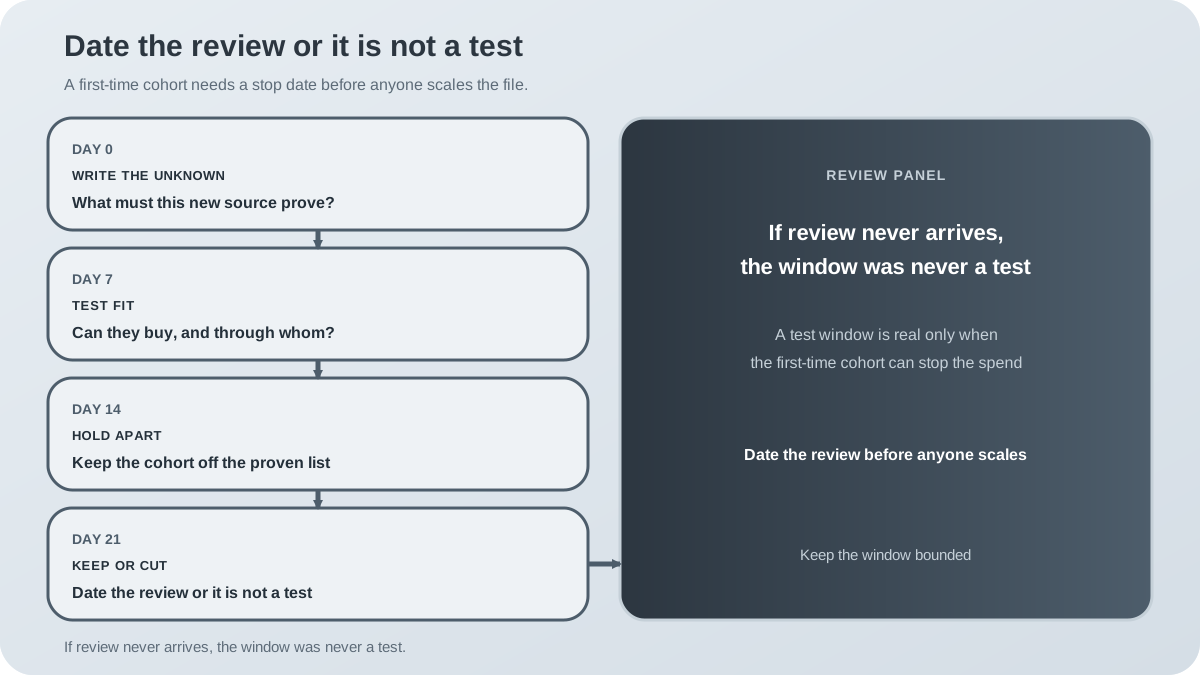
A marketing plan makes that judgment reviewable. It should connect the target market and your advantage to the actions you will take, the goals you will watch, the budget you will spend, and the review that can stop the spend. Without that review, qualification becomes a feeling.
- Recency of a record is not evidence of fit
- A first-time cohort needs its own qualification questions
- Pause the source when the group fails, not only the row
- Write the review that can end the budget
Recency is not fit
Reject the tempting read that new means arrived lately. Recency is a filing fact. Fit is a research fact. If you cannot separate those, you will scale a timestamp and call it qualification. Keep the first-time cohort on its own scorecard until research can defend the source.
Date the review
Picture a familiar week. Your team already books meetings from one industry list. A sourcing run then returns a large set of companies in an adjacent industry. The reflex is to pour those names into the same sequence and call the result new lead generation.
Hold the operating constraints still: one existing outbound pod, no extra hire this cycle, and a hard stop after a bounded test window (scenario_assumption). You are not staffing a new channel. You are borrowing time.
The input is one adjacent industry slice, one role family, and a separate reporting lane for first-time names (scenario_assumption). The unknown is whether this industry has buyers with need and willingness who can be reached through the channel you already run (scenario_assumption).
Change the work, not the slogan. Keep the new names off the proven list. Research demand, audience traits, market limits, and competition before you raise spend.
Keep human review in front of send so the experiment stays inspectable. A longer candidate list is not a completed test.
Watch whether the first-time cohort still makes sense after a fit check, not whether the list got longer. If the new cohort cannot show fit, you stop spending on that source. If it can, you write the next, slightly larger test.
That judgment applies when the audience or channel is actually new. It does not apply when you are only refreshing a source that already converts.
- Share of names that remain in the first-time cohort after review
- Fit evidence in that cohort after research, not only reply count
- Spend against the learning budget, and whether the review date was honored
- Opt-outs and objections attributed to the new collection
- A keep, cut, or redesign decision recorded at the review
Keep or cut
The next checkpoint is the review you already dated. Do not wait for a year-end dashboard. Ask whether the unknown is smaller, whether the first-time cohort still deserves budget, and whether the tool is still only an instrument. If you cannot answer those three, you do not have a metric system yet. Verify the review cadence for your unit, and decide at the first planned review.
Write the unknown. Write the evidence that would end the test. Isolate the first-time cohort, and keep the source only if that evidence still supports it.
Frequently asked questions
What is the single most important factor in new lead generation?
Whether novelty is testable. Write the unknown, cap a learning budget, and name the evidence that would end the experiment. Volume of new names does not decide it.
What do most buyers get wrong about new lead generation?
They treat it as a larger list or a newly added tool, and they skip research into need, willingness, and market limits. They also mix first-time names into a proven source.
How should you actually decide on new lead generation?
Define the new source or audience, research fit, run a reviewed first-time cohort, and keep or stop based on that cohort's evidence. Do not decide from name count alone.
When does new lead generation matter most?
When you are starting or expanding into an unproven source or audience, especially when automated sourcing makes that audience look busy before anyone has validated buying context.
Explore OKKI Go
- Explore OKKI GoReview the official product overview for company search, contact access, outreach preparation, and reviewed sending.Official OKKI Go resource ↗
- Review OKKI Go use casesInspect the documented candidate search, user revision, selected contact access, drafting, and confirmation workflow.Official OKKI Go resource ↗