
An effective outbound sales playbook establishes clear entry criteria, explicit review points, and stopping conditions so your sales development reps test hypotheses without making every account sound identical.

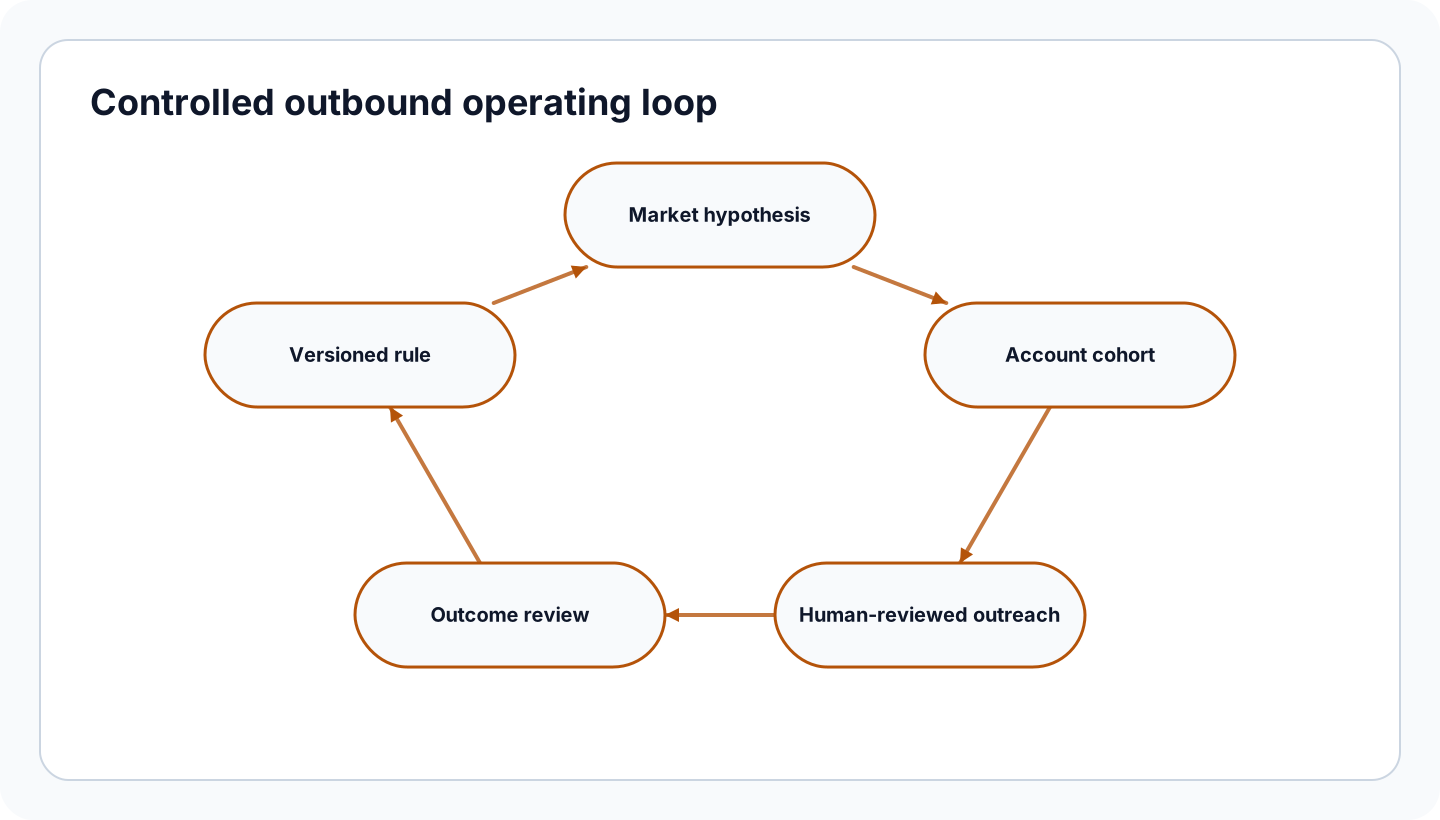
Start with a market hypothesis, not a list
Before you hand your reps a list of contacts to cold call, you must force them to articulate a specific market hypothesis that defines why a targeted account segment is experiencing an urgent operating pain right now.
You need to teach your sellers how to validate that hypothesis using clear account evidence before they draft a single email, asking what specific trigger proves this company actually faces the problem you claim to solve.
Your playbook must explicitly state the stop conditions for disqualifying an account early, ensuring your team spends zero capacity on accounts that fail your core structural criteria or lack the verified business signals you require.
When sellers treat an outbound campaign as a controlled test of a market premise, every call and response becomes valuable data to review during your sprint retrospective rather than just an exercise in hitting raw volume metrics.
Define who enters the first controlled cohort
You must restrict your initial outbound sprint to a tightly defined group of accounts so that your sales representatives test specific operating assumptions rather than spraying vague, uncalibrated messages across an unstructured addressable market under rising pipeline quotas.
Before your team launches any outbound outreach, ensure that every targeted record undergoes explicit status changes to document ownership, qualification attributes, and historical touchpoints within your CRM, as systematic process documentation prevents early pipeline reporting from decaying into guesswork.
When using natural-language search or discovery software to build candidate lists, require your reps to review each account and confirm contact details before triggering any outbound send status, keeping human confirmation firmly in the loop.
You must also mandate that your coaching process checks regulatory rules regarding recipient types, personal data usage, and channel objections across targeted jurisdictions like the UK, verifying local legal guidance before approving any account for active outbound engagement.
Choose the account boundary
How do you establish the perimeter for this first sprint? Direct your reps to select accounts using verifiable technical or operational markers rather than broad firmographic generalizations. Ask them: can you point to concrete evidence that this account currently experiences the problem you solve? When your team bounds the cohort by observable attributes, you create a controlled environment where sprint data reflects true message relevance rather than noise or random outreach performance.
Name the evidence that would disqualify it
Teaching your SDRs when to stop is just as important as showing them how to prospect. Define non-negotiable disqualification rules up front, such as recent platform migrations, active competitor contracts, or missing key decision-maker roles. Require your reps to document these exit signals immediately in the CRM instead of keeping disqualified accounts in sequence. Setting clear stop conditions protects your team's time, keeps data clean, and prevents wasted outbound volume on unreachable accounts.
Research for a message decision
Before writing a single outreach line, you must require your reps to perform a structured candidate review that gathers verified business triggers rather than spending hours hunting for irrelevant personal trivia across disparate web pages.
When coaching your sellers on message structure, instruct them to avoid opening with premature metric claims, because Gong Labs found that leading cold emails with ROI language was associated with a lower probability of booking a meeting within ten days.
Before sending any initial touch, confirm that your team verifies recipient types and channel rules, since regulatory guidelines such as the UK ICO standards vary based on corporate structure, personal data usage, and explicit marketing objections.
You should establish a strict operating rule where reps must complete explicit user confirmation and formal system status changes before dispatching drafts, ensuring that every single outreach decision remains reviewable whenever account context or route corrections occur.
Assign each channel a permitted job
When you construct your outbound sales playbook, assign each communication channel a distinct operating purpose so your reps know precisely when to pivot mediums rather than blindly echoing identical, heavy-handed pitches across email, phone, and social platforms.
Rely on cold email to establish verifiable context or request specific clarification, but instruct your team to avoid leading with generic ROI language, as Gong Labs associated those pitches with lower meeting-booking rates across 132,552 analyzed messages.
Direct your sellers to use phone conversations for immediate route corrections and live qualification, while ensuring that your contact discovery and draft preparation workflows require explicit user confirmation before sending any candidate outreach or updating campaign records.
Mandate strict compliance boundaries across every touchpoint in your process, recognizing that regulatory rules like the UK Information Commissioner's Office guidelines vary substantially depending on the target channel, recipient classification, personal data transparency, and handling of objections.
Make human review part of execution
When you implement automated candidate discovery and draft preparation capabilities, you must require reps to review and confirm messaging before dispatch so that route corrections happen prior to account contact rather than after an embarrassing error. Within that bounded review step, OKKI Go's documented workflow can support natural-language company search, candidate review, contact discovery, draft inspection, and user confirmation before sending. Teams must still verify coverage, configuration, compliance obligations, and downstream outcomes for their market.
Will you ask your reps why a specific account qualified for an exception, forcing them to justify their reasoning before you allow them to alter sequence parameters or skip required field updates in your system?
Before your team launches cold outreach sequences, inspect their drafts to ensure they test specific value propositions directly, knowing that leading heavily with ROI language was associated with lower meeting conversion probabilities in observational sales research.
Establish explicit stop conditions and opt-out workflows across every outreach channel, ensuring your reps understand that market-specific regulatory guidance varies by recipient type and local laws when utilizing personal business contact data for outbound marketing.
Qualify evidence before scheduling a handoff
Before you permit a sales development representative to schedule an account handoff, instruct them to log explicit, observable prospect criteria within structured CRM fields rather than relying on subjective excitement or unverified verbal enthusiasm from a brief conversation.
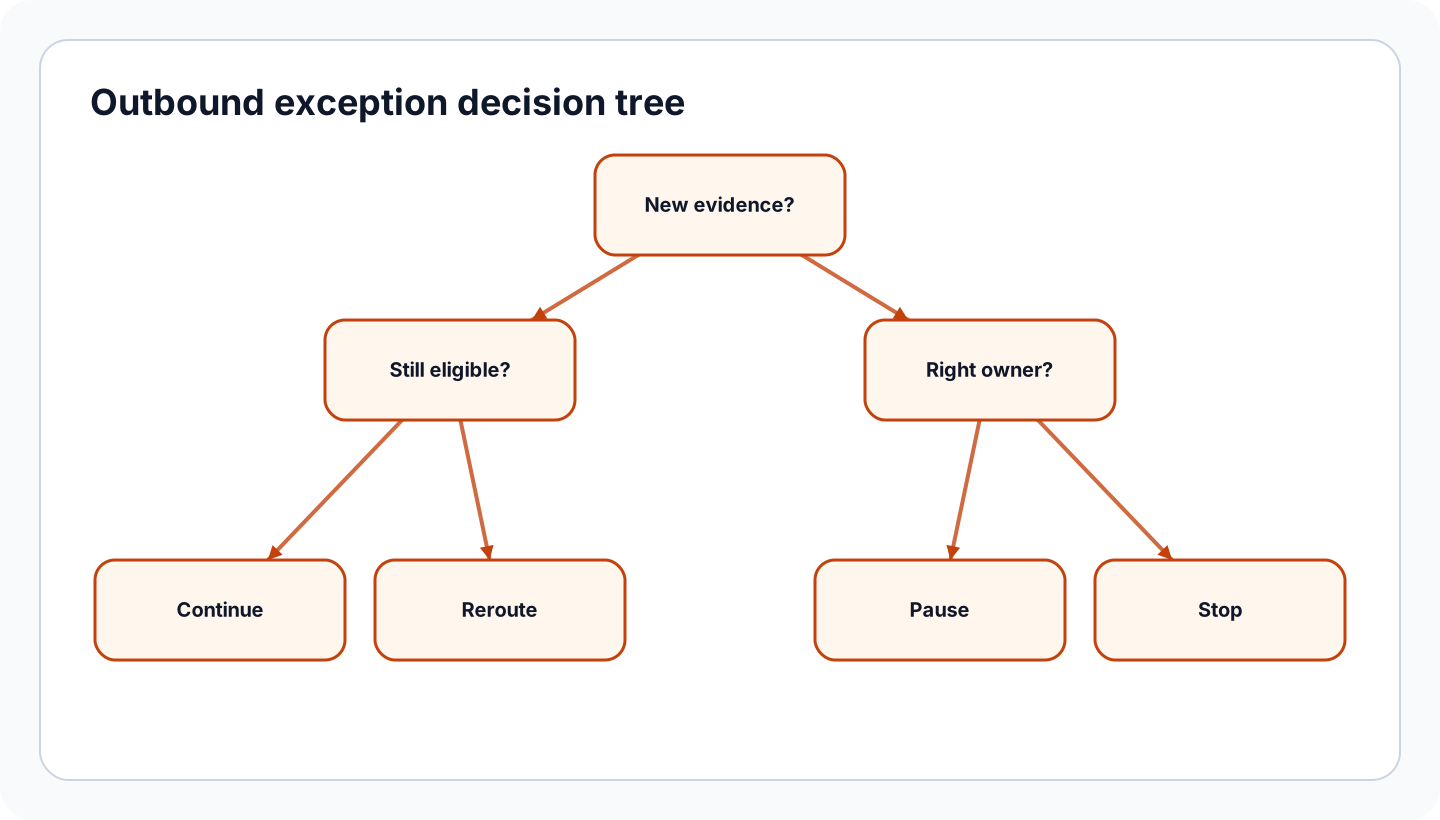
When your team member cannot verify the required technical framework or business trigger during an initial discovery call, you must instruct them to pause the pipeline transition until they gather verified details or explicitly document the exception.
By enforcing rigorous record updates and clear qualification histories across all prospect records, you protect your account executives from receiving unvetted pipeline while training your representatives to judge true account quality before attempting an official handoff.
When you systematically review every single handoff exception during your weekly sprint retrospective, you transform individual seller mistakes into actionable operating insights that continuously refine qualification thresholds and prevent unvetted pipeline from reaching account executives.
Route exceptions instead of improvising
When a target account deviates from your established operational rules, you must resist the temptation to invent a one-off outreach sequence that bypasses system tracking, because hidden improvisations prevent your team from diagnosing systemic process flaws.
By explicitly separating standard lead progression from unverified edge cases through systematic record status updates, you preserve actionable historical reporting while ensuring that non-conforming accounts receive a deliberate managerial review rather than sloppy, unmeasured outreach volume.
Although sellers frequently report heightened quota pressure in early pipeline generation, forcing poorly qualified target accounts into active cadence stages only multiplies daily operational inefficiency and distorts your sales team's true conversion metrics over sprint cycles.
When you establish clear stop conditions and explicit exception paths, every unexpected account scenario becomes valuable diagnostic data that refines your core playbook rules over time rather than remaining a silent source of wasted prospecting effort.
Pause when evidence goes stale
What should you do when key prospect data or job titles no longer match your initial research assumptions? Stop outreach immediately rather than sending automated messages based on unverified assumptions. Continuing to execute messaging against stale target profiles burns account domain health and risks breaching channel compliance rules. Halt the sequence, record the specific data discrepancy in your CRM, and queue the prospect for re-qualification before taking any further action.
Return the record with a reason code
How do you ensure exceptions improve the system instead of vanishing into dead pipeline? Require every representative to update lead fields with standardized return reason codes, such as missing contact details or unmapped tech stacks, whenever removing an account from an active sprint. Documenting explicit record changes and history preserves operating visibility, allowing management to analyze systemic patterns during sprint retrospectives and continuously refine account assignment criteria across the entire sales team.
Version the playbook from cohort reviews
Schedule a structured review at the end of each outbound sprint so that you can evaluate real account evidence, identify where reps paused or deviated, and decide whether to update your decision rules or refine your targeting criteria.
Ask your sales development reps which qualification stops prevented wasted outreach and which custom messaging exceptions yielded genuine buyer engagement, ensuring that every proposed operational change relies on systematic cohort evidence rather than subjective sentiment or isolated luck.
When your review demonstrates that a specific lead trigger or outreach rule consistently underperforms, update the master playbook explicitly with version numbers and documented change logs instead of letting individual reps invent informal, unmonitored workarounds on their own.
Will you commit to locking each updated playbook version for a complete sprint before making further adjustments, ensuring that your sales team gathers sufficient operational data to evaluate whether your standard outbound rules actually produce qualified pipeline?
Begin your next controlled sprint by auditing your current outbound rules. Ask your team: where are reps making unreviewed messaging exceptions, and which accounts should have hit a stop condition days ago? Lock down your entry criteria, standardize record field updates, and require rep confirmation prior to sending messages. Use your end-of-sprint review to analyze flagged exceptions, refine decision boundaries, and eliminate guesswork. Teach your reps to master structured decision-making before increasing account volume, turning your hypothesis into a reviewable operating system.
Frequently asked questions
How do I know when a cold outreach sequence should stop?
Define an explicit stop condition based on clear criteria, such as reaching a set touchpoint limit without buyer engagement or identifying an unqualified trigger. When an account hits this threshold, mandate a status change in your CRM rather than letting reps send endless follow-ups. Stop conditions preserve sender reputation and keep your reps focused on high-intent accounts currently matching your active target profile.
Should I give my SDRs strict scripts or let them write personalized emails?
Standardize the underlying evidence, buyer triggers, and qualification rules while leaving the account-specific messaging flexible for the rep. Do not force reps to copy an exact script. For example, Gong Labs analyzed 132,552 cold emails and found leading with ROI language associated with a lower meeting-booked probability within ten days; test value propositions carefully rather than mandating fixed script copy across your sprint.
How should our team track process changes in the CRM?
Separate lead status, assignment, qualification criteria, and stage conversions into distinct record fields. As Salesforce documentation illustrates, explicit record changes give managers visible history to review process execution and evaluate reps based on decision quality. Require reps to document why an exception was made before moving an account to the next status, making every operational variance reviewable at the sprint boundary.
How can automated tools fit into a reviewable outbound system?
Use automation to handle research mechanics while keeping human oversight on critical actions. For instance, tools like OKKI Go support natural-language search, candidate review, contact discovery, and draft preparation, but explicitly require user confirmation before sending while displaying visible send status. Ensure your playbook mandates rep verification before any automated message goes out, maintaining control over outreach quality across the sprint.
How do we handle international regulatory compliance in our outbound playbook?
Incorporate regional legal guidance directly into your account entry criteria. For example, the UK Information Commissioner's Office outlines that B2B marketing rules vary significantly by channel, recipient type, personal data usage, and objection handling. Build explicit checks into your playbook so reps verify jurisdiction and consent requirements before adding international contacts to a campaign, preventing unauthorized outreach before it occurs.